

Your Fall Home Maintenance Checklist for the Fort Worth Area
Fall is one of the best times of year to get ahead of home maintenance. North Texas Falls are short and unpredictable, w …

When most homeowners start thinking about tile flooring, they picture a finished room — clean grout lines, a beautiful surface, a floor that looks like it belongs in a magazine. What they think about less often is what is underneath that surface and how the material itself will behave in a North Texas home over the next 20 years. The difference between porcelain, ceramic, and natural stone is not just aesthetic. It is a question of density, water absorption, structural tolerance, and maintenance — and in a region where expansive clay soil and concrete slab foundations are part of daily life, those differences matter more than they do in most other parts of the country.
At Stanton & Co., we specify tile for kitchens, bathrooms, entries, living areas, and outdoor spaces across Fort Worth, Keller, Southlake, Mansfield, Arlington, Aledo, and the surrounding area. In an earlier blog Choosing the Right Flooring for Your Fort Worth Area Remodel: A Comprehensive Guide we covered all types of flooring used in Fort Worth and surrounding area remodels. This blog walks through what separates porcelain from ceramic, when ceramic is and is not an appropriate choice, and how natural stone compares to both — along with the installation fundamentals that determine whether any tile floor performs the way it should for the long term.
Porcelain and ceramic are both clay-based products fired in a kiln, and they are often sold side by side in the same showroom. To the eye, a glazed ceramic tile and a glazed porcelain tile can look nearly identical. The differences that matter are in the clay composition, the firing temperature, and what those factors produce in terms of density and water absorption.
Ceramic tile is made from coarser clays fired at temperatures between 1,800 and 2,000 degrees Fahrenheit. The result is a tile that is less dense and more porous than porcelain. Ceramic tiles typically absorb between 0.5 and 7 percent of their weight in water, depending on the product. Porcelain is made from more refined clays, fired at higher temperatures and pressed under greater pressure. By industry standard — both ASTM C1278 and ISO 13006 — a tile must absorb 0.5 percent or less of its weight in water to be classified as porcelain. That threshold is not a marketing detail. It is the technical line that separates a dense, near-impervious product from one that absorbs moisture at a measurable rate.
The Porcelain Enamel Institute (PEI) rating system measures surface wear resistance on a scale of 1 to 5. Most porcelain tiles carry a PEI rating of 4 or 5, suitable for heavy residential and commercial traffic. Ceramic tiles can range from 1 to 4 — a PEI 1 ceramic is appropriate for walls where it will see no foot traffic. A ceramic floor tile rated PEI 4 will perform adequately in moderate residential use, but it will not hold up to the same demands as porcelain over time.
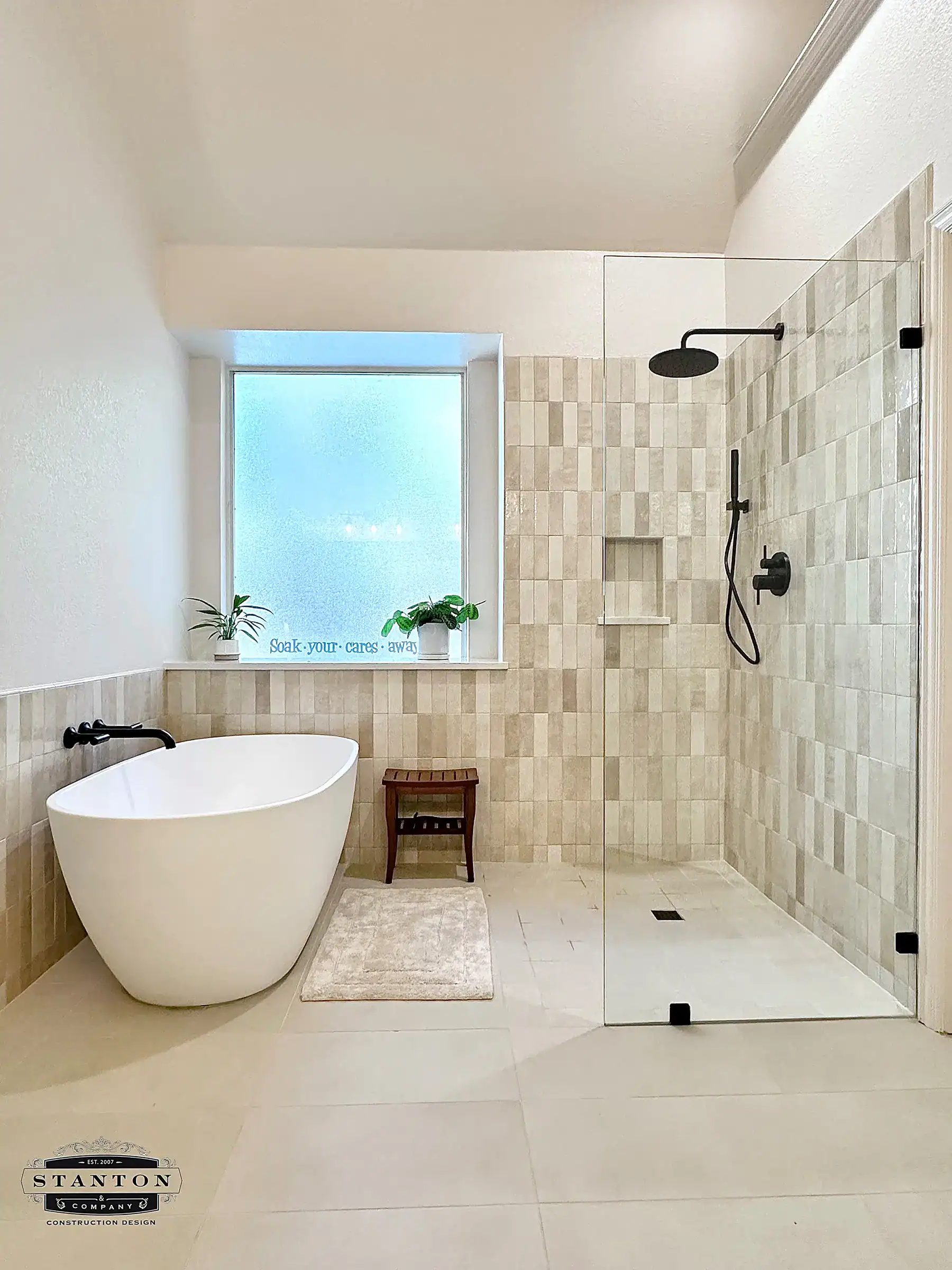
The density and low water absorption of porcelain give it a clear performance advantage on floors, and the North Texas environment amplifies that advantage in ways that matter specifically to homeowners in this market.
Moisture resistance: Porcelain absorbs less than 0.5 percent water, making it essentially waterproof at the tile body level. On a bathroom floor, in a kitchen, or anywhere moisture is a regular part of the environment, this distinction is significant. Ceramic’s higher absorption rate means moisture penetrates the tile body over time, which can lead to staining, degradation of the tile at the surface, and in freeze-thaw cycles, cracking from expansion. Fort Worth does not see hard freeze-thaw cycles the way northern climates do, but the principle holds: less moisture absorption means longer-lasting tile.
Foundation movement and soil conditions: This is the factor most specific to the DFW market and the one that most directly separates porcelain from ceramic as a flooring material in North Texas homes. The expansive clay soil that underlies most of Tarrant County and the surrounding area is known as shrink-swell clay. It absorbs water and expands during wet seasons, then contracts and pulls away from foundations during dry periods. Texas experiences some of the most aggressive shrink-swell cycles in the United States. That movement — even fractions of an inch of differential displacement between sections of a slab — transfers directly to bonded tile above it. The stress concentrates at grout joints, tile edges, and corners, resulting in hairline cracks in grout, and eventually in the tile itself. Because porcelain is denser and has less porosity than ceramic, it is somewhat more resistant to stress fracture from substrate movement. Ceramic, by contrast, is more brittle under the same forces. Industry data and tile installation professionals consistently identify ceramic tile as more susceptible to chipping and cracking over a 10-year period in high-stress environments. In a North Texas slab home where the foundation moves seasonally, that brittleness becomes a real-world liability.
Long-term performance: Over a 10-year period on a residential floor, the performance gap between porcelain and quality ceramic becomes visible. Porcelain holds its surface better under sustained foot traffic, resists staining at the tile body level, and handles the demands of active households more durably. Ceramic in the same application may show earlier surface wear, more frequent grout cracking, and in some cases tile chipping at edges and corners.
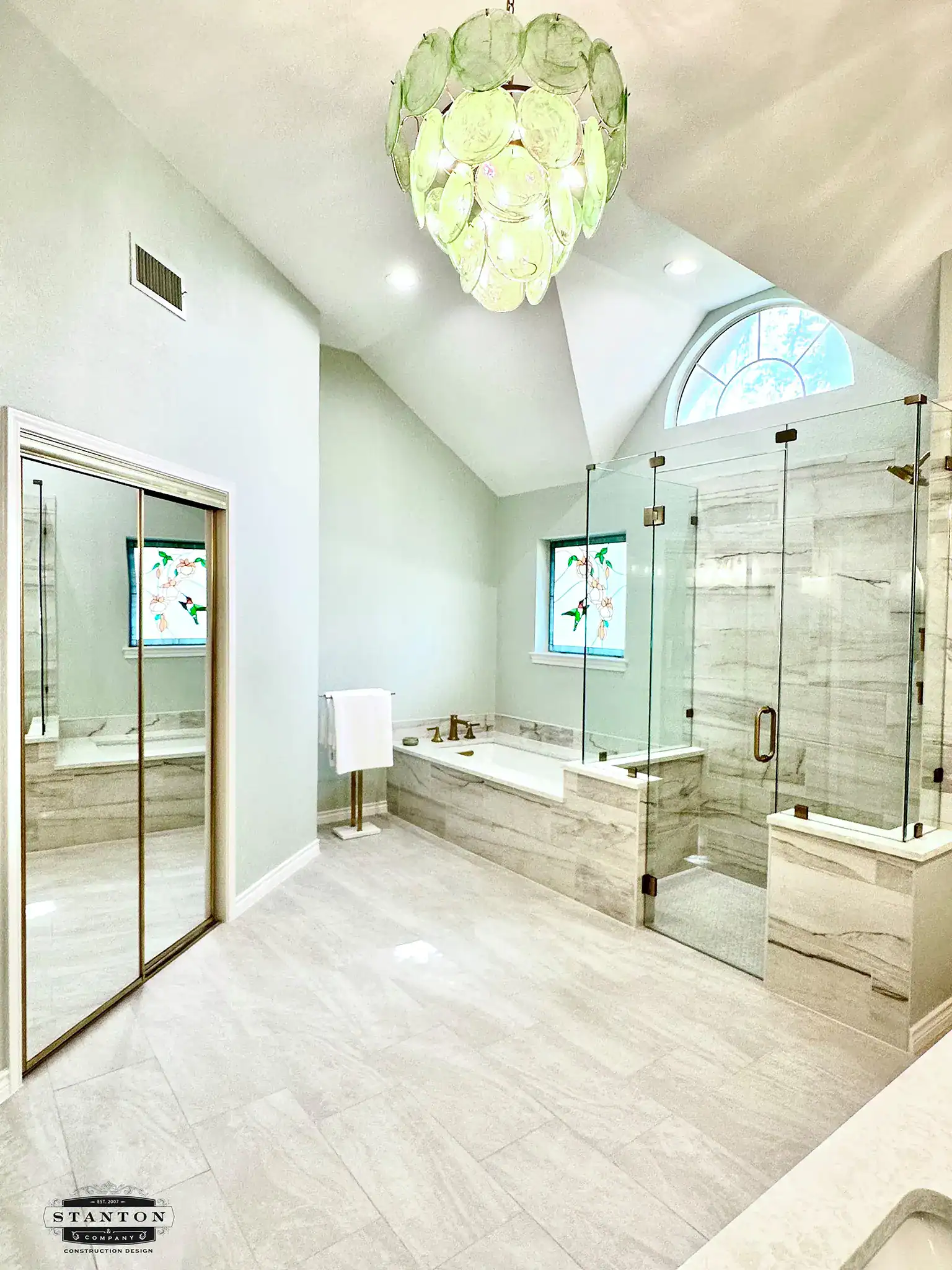
Ceramic tile is not a poor material — it is a material with appropriate and inappropriate applications. Understanding that distinction helps homeowners make informed decisions rather than treating ceramic as simply a less expensive version of porcelain.
Ceramic performs well on walls and backsplashes, where it sees no foot traffic and where its higher porosity is not a structural concern. Ceramic is available in a wider range of decorative styles, colors, and textures than porcelain in many price ranges, which makes it the better design choice for wall tile, shower surrounds above the floor line, and decorative backsplash applications. A ceramic subway tile backsplash in a kitchen, for example, is entirely appropriate and will perform well for years.
For flooring, ceramic is sometimes chosen as a budget decision. In a bedroom or a very low-traffic secondary room where foot traffic is minimal and moisture is not a factor, a higher-rated ceramic floor tile (PEI 3 or 4) can be a reasonable choice for homeowners managing a tight budget. The trade-off is long-term durability and resilience to the foundation movement that is a reality of North Texas slab construction. Homeowners selecting ceramic for floors in this market should go in with clear expectations: it is an acceptable shorter-term choice at a lower price point, not an equivalent product to porcelain over the 20- to 30-year horizon.
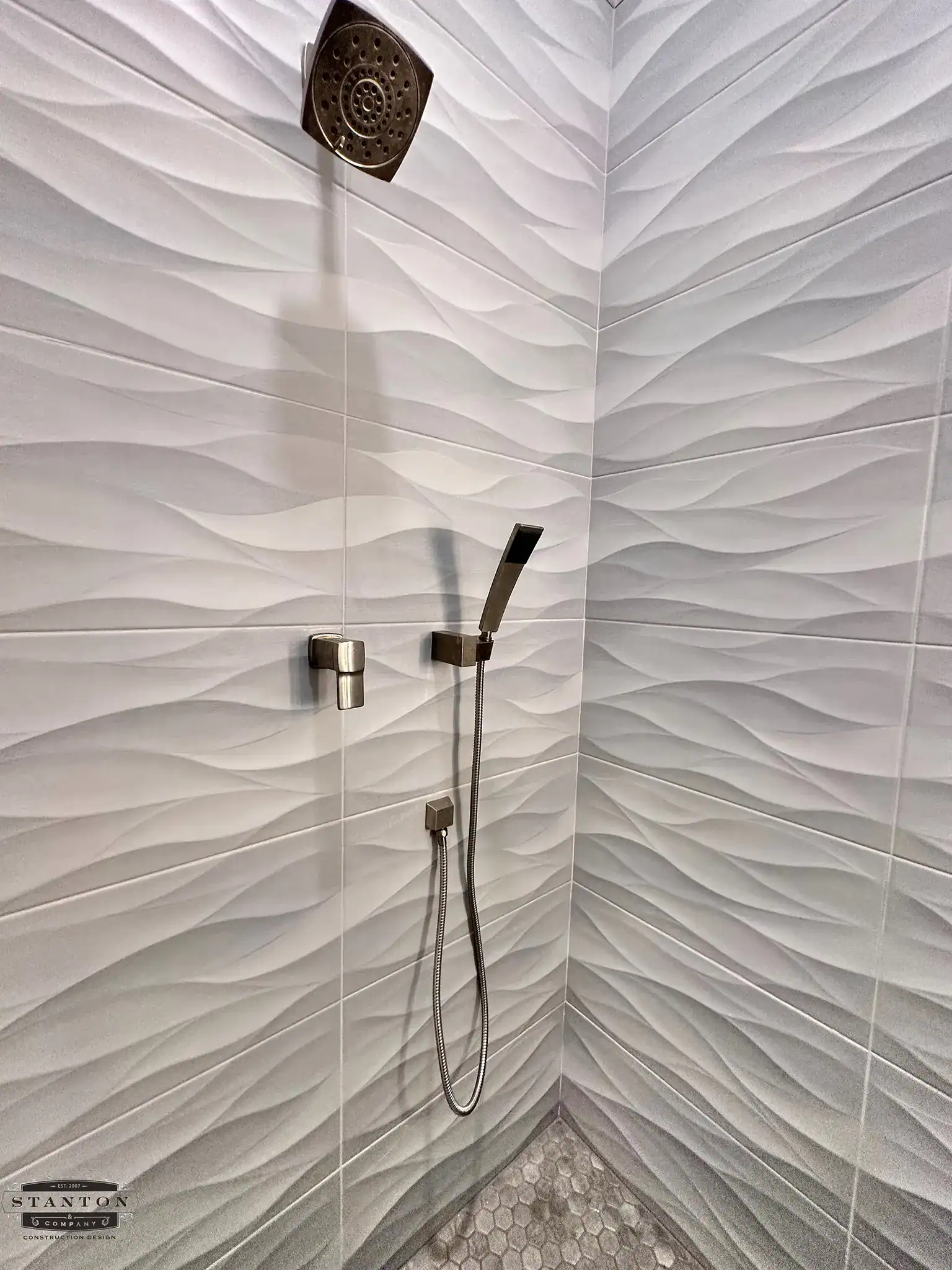
Natural stone — granite, marble, and travertine being the three most common in residential remodeling — occupies its own category in the tile conversation. It is neither porcelain nor ceramic; it is a material quarried from the earth, cut and finished to tile dimensions, and installed using the same fundamental methods as manufactured tile. The comparison to porcelain and ceramic comes down to three factors: durability by stone type, maintenance requirements, and how each material handles the North Texas environment.
Granite tile: Granite is an igneous rock and one of the hardest natural materials available for residential flooring. It is harder than most porcelain and significantly harder than ceramic, and it holds up well under high traffic when properly sealed and maintained. For homeowners who want the authenticity and premium feel of natural stone in a high-use space — a kitchen, a main living area, a formal entry — granite is the natural stone that makes the most practical sense. It is porous and requires sealing at installation and resealing every one to two years, but its density makes it relatively forgiving of normal residential use compared to softer stones.
Marble tile: Marble is a metamorphic stone with a distinctive veining and luminous surface that no manufactured product fully replicates. It is softer than both granite and most porcelain, making it more susceptible to surface scratching, etching from acidic substances, and staining if not sealed and maintained properly. As we covered in our Countertop Materials blog, the maintenance conversation for marble is the same whether it is on a countertop or a floor: it is a beautiful material that rewards the right homeowner and requires a genuine commitment to upkeep. Marble is best specified in lower-traffic spaces — primary bathrooms, formal entryways in appropriate households, powder rooms — where its visual impact can be appreciated without the accelerated wear of daily high-traffic use.
Travertine tile: Travertine is a limestone formed around mineral springs, with a warm, earthy palette of creams, tans, and golds that gives it a character unlike any other tile material. It has a naturally porous, pitted surface — those characteristic voids are part of its identity. For interior flooring, filled and honed travertine is the standard specification: the voids are filled with grout or resin before finishing, creating a smooth, cleanable surface that preserves the stone’s warmth. Travertine is softer than granite and requires sealing and regular maintenance. It performs best in moderate-traffic areas where its warmth and character can be a design asset rather than a maintenance liability.
All three natural stones are porous to varying degrees, which has a specific implication in the North Texas market. Like ceramic tile, porous stone on a slab with any history of moisture intrusion requires proper moisture mitigation before installation. A natural stone floor installed over a damp slab without appropriate moisture management is a long-term problem regardless of how beautiful the material is. And all natural material should be sealed both before and after installation to prevent grout color from bleeding into the porous natural stone.
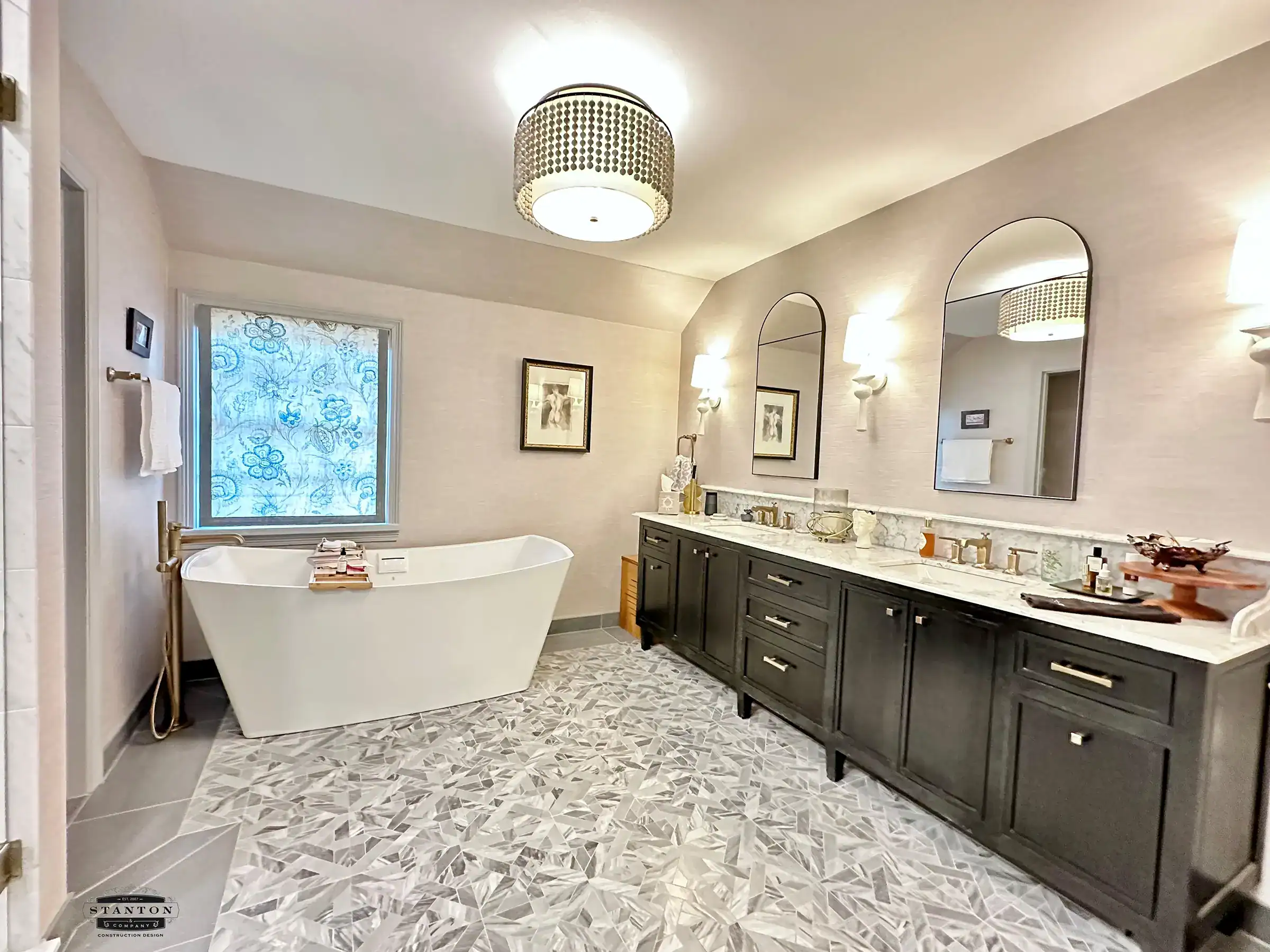
All three categories — porcelain, ceramic, and natural stone — require some level of ongoing maintenance, but the demands differ significantly.
Porcelain, ceramic, and natural stone are all installed using the same fundamental method: tiles are set in a bed of thinset mortar, which bonds the tile to the substrate, and grout is applied between the tiles to fill the joints and stabilize the installation. The method is consistent across all three materials. The quality of those installation materials, however, is not a detail to take lightly — particularly in a North Texas slab home.
Thinset mortar: Thinset is the adhesive mortar that bonds tile to the subfloor or wall. For porcelain and natural stone, a polymer-modified thinset is required — the polymer additives improve bond strength, flexibility, and resistance to moisture. Standard unmodified thinset is not appropriate for large-format tile, natural stone, or porcelain on a slab subject to movement. Back-buttering — applying thinset to both the substrate and the back of the tile — is a critical technique for large-format tile and natural stone to ensure full coverage and prevent hollow spots that lead to cracking.
Crack isolation membrane: In North Texas slab homes, a crack isolation membrane between the concrete slab and the tile installation is not optional — it is the most important protection against the foundation movement that is a fact of life in this market. The expansive clay soil beneath DFW-area slabs creates seasonal movement that, without a membrane, transfers directly into the tile layer. A crack isolation membrane — either a sheet membrane or a liquid-applied product — absorbs that movement before it reaches the tile, preventing the reflective cracking that ends tile installations prematurely. The Tile Council of North America specifically recommends crack isolation membranes for concrete slab installations. Stanton & Co. specifies this layer as part of our standard tile installation practice in applicable applications.
Grout: Grout fills the joints between tiles and is the element of a tile installation most directly exposed to daily use, moisture, and cleaning. Low-quality grout cracks, stains, and deteriorates far sooner than the tile around it, and replacing deteriorated grout across a large floor is a significant labor cost. High-quality grout — properly mixed and applied, sealed after curing, and maintained over time — keeps the installation tight, prevents moisture from working beneath the tile, and holds the floor’s appearance for years longer than a budget grout product will. For natural stone applications, the grout must also be color-matched to complement the stone and applied carefully to avoid staining the stone surface during installation. For wet areas and high-traffic applications, an epoxy-based grout offers the highest stain resistance and durability of any available option, though it requires more skill to install correctly.
These installation fundamentals apply to every tile material. A premium natural stone floor installed with inadequate thinset and low-quality grout over an unmitigated slab will fail sooner than a mid-range porcelain floor installed correctly. The material choice matters. The installation quality matters at least as much.
Natural stone installation carries a higher labor premium than porcelain or ceramic in most cases, reflecting the additional skill, care, and time required for cutting, handling, sealing, and grout application. Subfloor preparation, crack isolation membrane, and moisture mitigation are additional cost factors that apply across all tile types in North Texas slab homes.
Tile is the best flooring choice available for avoiding water damage, but that same hard, smooth surface can also be slippery when wet — and that is a safety consideration that deserves its own conversation before any tile is selected. This applies across all three materials covered in this blog. A glossy, highly polished porcelain, ceramic, or natural stone surface can be just as slick underfoot as any other when water is present, regardless of how durable or beautiful the material is.
The technical measurement behind this is the coefficient of friction, most commonly expressed today as DCOF — dynamic coefficient of friction. The tile industry standard, ANSI A137.1, requires a minimum wet DCOF of 0.42 for tile recommended in level interior spaces that may get wet with plain water, such as a bathroom floor. The higher the DCOF value, the more traction the tile provides underfoot; a lower value means a smoother, slicker surface. For areas exposed to more than incidental water — pool decks, covered patios, and other exterior or barefoot-wet applications — a separate ramp-test rating system (R9 through R13) is often used, since these spaces call for a higher level of slip resistance than the standard interior minimum.
This is a conversation worth having with us before tile is selected for any of the following: bathrooms and shower floors, entries near exterior doors where rain or irrigation gets tracked in, and traffic areas surrounding a swimming pool or outdoor living space. Finish matters as much as material — a honed or matte finish will generally provide better traction than a highly polished one, and texture can be added to certain tile products specifically to improve slip resistance in these higher-risk areas without sacrificing the look a homeowner wants.
We guide our customers through this consideration on every project, and we recommend any homeowner ask about a tile’s coefficient of friction rating before finalizing a selection for a wet or high-traffic area — whether that project is with us or with another remodeler. Matching the right slip resistance to the right space is just as important as matching the right material.
The right tile depends on the room, how you live in it, and how much maintenance you are willing to commit to over time. For high-traffic areas, kitchens, and anywhere moisture is a regular factor — porcelain is the correct specification for durability and long-term performance. For walls, backsplashes, and lower-traffic decorative applications — ceramic is entirely appropriate and offers more design options at accessible price points. For homeowners who want the authenticity and premium perception of natural stone — granite in high-use spaces, marble and travertine in more formal or lower-traffic settings — natural stone delivers a result that no manufactured product can fully match, with a maintenance commitment to match.
Many of our strongest projects combine all three: porcelain on main living area and kitchen floors, natural stone in the primary bathroom or formal entry, and ceramic on backsplashes and shower walls. Each material in its right application, installed correctly, produces a result that performs and looks the way it should for the life of the home.
For a full comparison of all flooring materials including wood and LVP, see our Comprehensive Flooring Comparison blog. To schedule a free in-home consultation and estimate, call 817.731.5855 ext. 1 or Reach us through our contact form You can also visit our Design Center at 4824 Camp Bowie Blvd., Fort Worth to see beautiful examples of all these materials at the Stanton & Company Showroom | Fort Worth Design Center
Proudly Serving the DFW Metroplex
Stanton & Company provides full-service residential remodeling, custom cabinetry, countertops, flooring, and design services to homeowners throughout the Dallas–Fort Worth area, including Fort Worth, Benbrook, Aledo, Willow Park, Hudson Oaks, Weatherford, Brock, Keller, the Mid-Cities (Euless, Bedford, Hurst), North Richland Hills, Southlake, Colleyville, Argyle, Arlington, Pantego, Mansfield, Kennedale, Burleson, and Crowley. Visit our Design Center on Camp Bowie Blvd. or call 817.731.5855 ext. 1 to schedule a consultation.
Explore more remodeling tips, material comparisons, and project guidance from Stanton & Company.
Fall is one of the best times of year to get ahead of home maintenance. North Texas Falls are short and unpredictable, w …

The remnants of Hurricane Polo brought heavy rain and flooding to areas around Fort Worth this week. In light of Hurrica …

Sometimes your family has outgrown the house you love. If you are a homeowner in Fort Worth, Keller, Southlake, Mansfiel …
4824 Camp Bowie Blvd.
Fort Worth, Texas 76107
817.731.5855
Open 9am-5pm (M-F)
Open 10-2 (Sa)
6623 Corporation Parkway – Suite 140
Fort Worth, Texas 76126
817.441.2790
Open 8am-5pm (M-F)
© Copyright 2026 - 2026 Stanton and Company, Inc, All Rights Reserved. | Website Design by WABW Media Group