
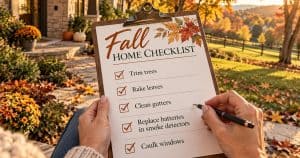
Your Fall Home Maintenance Checklist for the Fort Worth Area
Fall is one of the best times of year to get ahead of home maintenance. North Texas Falls are short and unpredictable, w …
Luxury vinyl plank — LVP — has become the most popular flooring upgrade in residential remodeling across the DFW area over the past decade, and it is not hard to understand why. It looks like hardwood. It performs like a waterproof product. It installs over concrete slab without the climate concerns that come with natural wood. And it costs significantly less than stone or hardwood. For most homeowners in the Fort Worth area, the question is not whether LVP is a reasonable choice — it is whether it is the right choice for their specific home and how they live in it.
For most North Texas homeowners, the answer is yes.
North Texas presents a specific set of flooring challenges that eliminate or complicate many materials that work fine in other parts of the country. Summers are hot and humid. Winter can drop relative humidity significantly. And the dominant foundation type throughout Tarrant County and across the DFW metroplex — concrete slab on grade — means most floors are installed directly over concrete, which carries moisture year-round.
LVP handles this range of conditions better than natural wood products. It is dimensionally stable — it does not absorb moisture from the air the way solid hardwood does, and it will not cup, gap, or buckle with seasonal humidity changes. This climate-resistant behavior is the single biggest reason LVP has taken over from solid hardwood in the DFW new construction and remodeling market.
One climate nuance is worth noting: rigid-core LVP can expand and contract with extreme temperature swings in rooms that are not consistently climate-controlled — a garage conversion, a sunroom with large south-facing windows, or a space that sits unconditioned for extended periods. In those applications, discuss the specific conditions with us before selecting a product.
For households with children and pets, LVP may be the most practical flooring choice available. The combination of waterproof performance, a durable wear layer, and easy cleanup addresses the real-world demands of an active family in a way that most other materials simply do not.
The wear layer on a quality LVP product is more scratch-resistant than a wood finish under the conditions that active households actually produce — pet claws, dropped toys, dragged furniture, and the general traffic of people who are not thinking about protecting the floor. Hardwood floors, whether solid or engineered, can show surface scratches from pet nails and everyday wear that dulls the finish over time. LVP’s wear layer handles that same traffic more forgivingly.
The waterproof performance matters even more. In a home with young children or pets, spills and accidents happen — and they do not always get noticed immediately. A liquid spill that sits on a solid hardwood or engineered hardwood floor can affect the finish, work into the seams, and damage the wood beneath if it is not cleaned up quickly. On LVP, that same spill wipes up cleanly whether it is caught right away or discovered an hour later. The floor underneath is unaffected. For families managing the reality of daily life, that margin for error is worth a great deal.
Cleanup generally is simpler on LVP than on any wood product. Regular sweeping and damp mopping is all the maintenance required. There are no finish care products, no refinishing concerns, and no anxiety about what the dog dragged in.
The single most important installation detail for LVP over concrete slab in a Fort Worth area home is the moisture barrier. Concrete is porous — moisture wicks upward from the ground through the slab, and without a barrier between the slab and the flooring, that moisture can compromise the LVP over time and create conditions for mold beneath the surface.
At Stanton & Co., we install a moisture barrier as standard practice on every LVP installation over slab. It is not optional, and it is not something to eliminate in the interest of saving a few dollars. If you are getting bids on a flooring project and a contractor does not mention a moisture barrier, ask about it specifically. As we cover in detail in our What to Expect When Remodeling blog, this is exactly the kind of installation detail that should be resolved before work begins, not discovered after the floor is down.
LVP must be acclimated to your home’s temperature and humidity for 48 hours before installation. The boxes need to be brought inside and allowed to adjust to the actual conditions of the space where the product will be installed. This step is critical to a successful installation. LVP that goes down before acclimating can expand or contract after installation, causing gaps, buckling, or separation at the seams. Every reputable installer knows this. If someone skips it, the floor will eventually show it.
Not all LVP is equal. The market is flooded with products at every price point, and the quality range is wide. Here is what matters most at the time of selection:
LVP is viewed positively by buyers as a practical, low-maintenance upgrade over carpet or laminate. It does not carry the same premium perception as hardwood or natural stone, but in today’s market — where buyers are increasingly focused on durability and ease of maintenance — a quality LVP installation throughout a home’s main living areas is a selling point, not a liability. The key word is quality: a budget product with thin wear layers and visible seams reads as a budget product to buyers.
LVP runs $5–$12 per square foot installed in the Fort Worth market for quality residential products. Entry-level products start below that range, and premium thick-core products with enhanced wear layers push toward the higher end. It is consistently the most cost-effective option for achieving a wood-look floor across large areas of a home. For a full comparison of flooring costs across all materials, see our Flooring Comparison blog.
For most North Texas homeowners — and especially for families with children and pets — LVP is an excellent flooring choice. It is practical, durable, climate-compatible, and accessible at a price point well below natural wood and stone. It handles the demands of an active household more forgivingly than hardwood, and it performs well in the DFW climate without the moisture and humidity concerns that limit other materials. The conditions that make it work are consistent climate control, a proper moisture barrier on slab installations, and product selection that prioritizes wear layer thickness and core construction over price alone.
To schedule a free in-home consultation and estimate, call 817.731.5855 ext. 1 or reach us through our online Contact Form. You can also visit our Design Center at 4824 Camp Bowie Blvd., Fort Worth.
Choosing the Right Flooring for Your Fort Worth Area Remodel: A Comprehensive Guide
What to Expect When You’re Remodeling: A Homeowner’s Complete Preparation Guide
Proudly Serving the DFW Metroplex
Stanton & Company provides full-service residential remodeling, custom cabinetry, countertops, flooring, and design services to homeowners throughout the Dallas–Fort Worth area, including Fort Worth, Benbrook, Aledo, Willow Park, Hudson Oaks, Weatherford, Brock, Keller, the Mid-Cities (Euless, Bedford, Hurst), North Richland Hills, Southlake, Colleyville, Argyle, Arlington, Pantego, Mansfield, Kennedale, Burleson, and Crowley. Visit our Design Center on Camp Bowie Blvd. or call 817.731.5855 ext. 1 to schedule a consultation.
Explore more remodeling tips, material comparisons, and project guidance from Stanton & Company.
Fall is one of the best times of year to get ahead of home maintenance. North Texas Falls are short and unpredictable, w …

The remnants of Hurricane Polo brought heavy rain and flooding to areas around Fort Worth this week. In light of Hurrica …
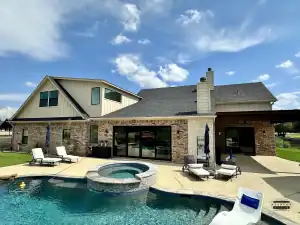
Sometimes your family has outgrown the house you love. If you are a homeowner in Fort Worth, Keller, Southlake, Mansfiel …
4824 Camp Bowie Blvd.
Fort Worth, Texas 76107
817.731.5855
Open 9am-5pm (M-F)
Open 10-2 (Sa)
6623 Corporation Parkway – Suite 140
Fort Worth, Texas 76126
817.441.2790
Open 8am-5pm (M-F)
© Copyright 2026 - 2026 Stanton and Company, Inc, All Rights Reserved. | Website Design by WABW Media Group