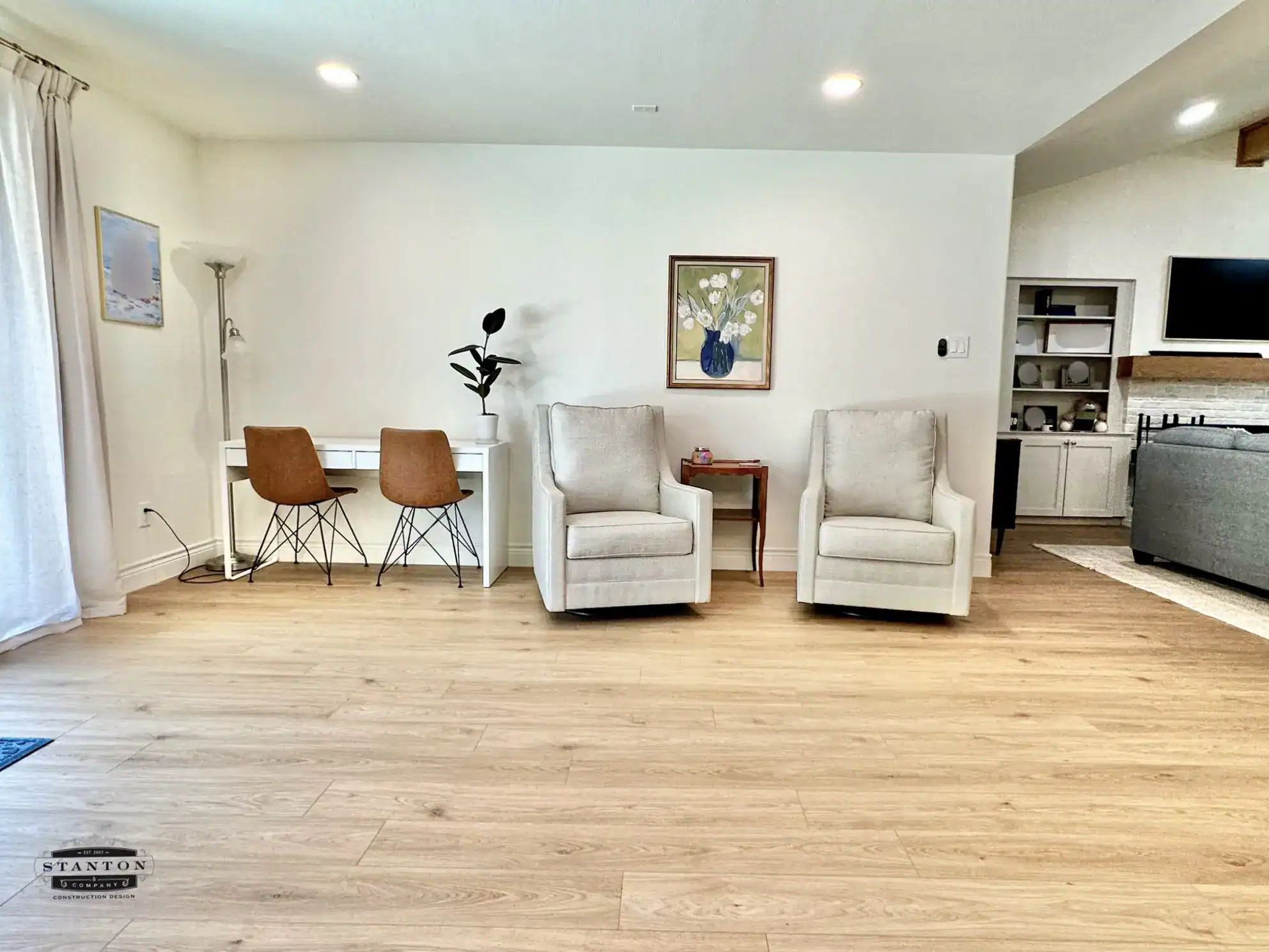
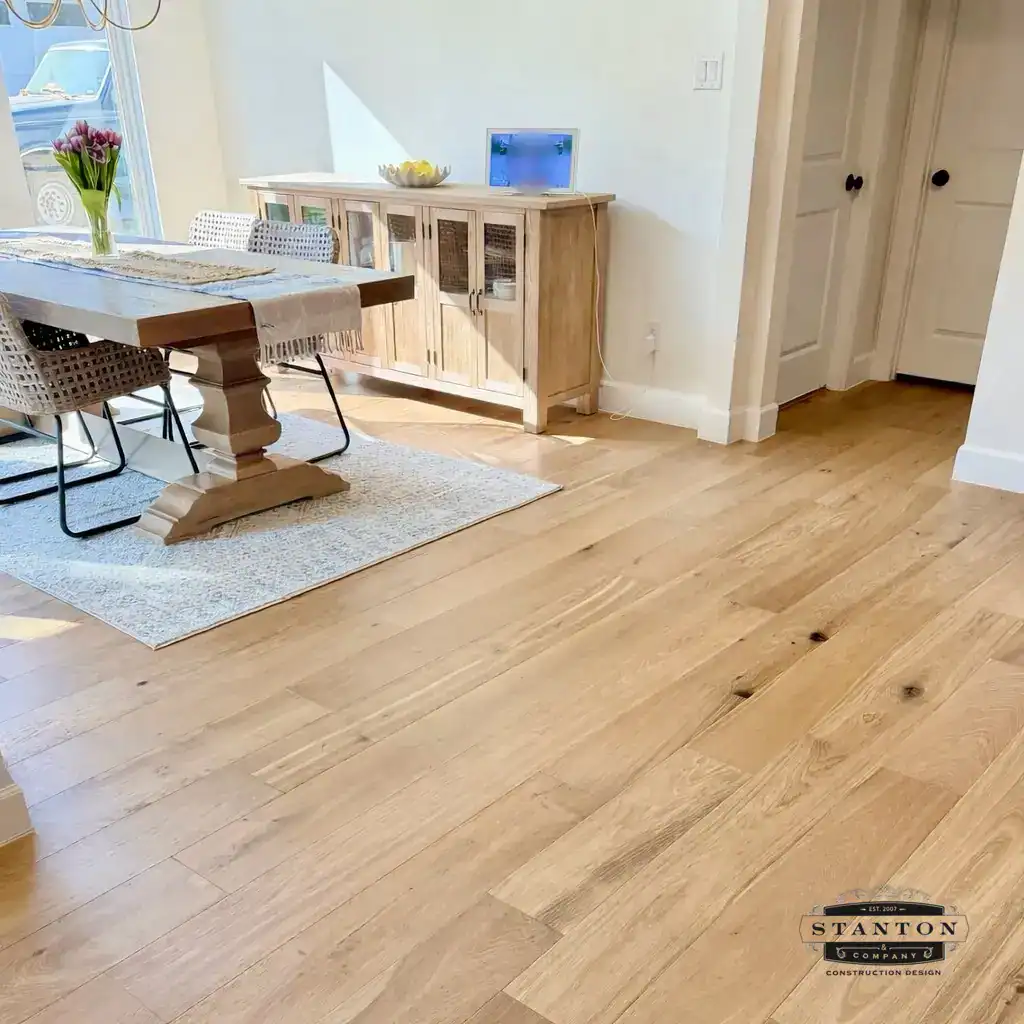
Is LVP Flooring a Good Choice for North Texas Homes?

Luxury vinyl plank — LVP — has become the most popular flooring upgrade in residential remodeling across the DFW area over the past decade, and it is not hard to understand why. It looks like hardwood. It performs like a waterproof product. It installs over concrete slab without the climate concerns that come with natural wood. And it costs significantly less than stone or hardwood. For most homeowners in the Fort Worth area, the question is not whether LVP is a reasonable choice — it is whether it is the right choice for their specific home and how they live in it.

For most North Texas homeowners, the answer is yes.


Why LVP Works Well in the North Texas Climate

North Texas presents a specific set of flooring challenges that eliminate or complicate many materials that work fine in other parts of the country. Summers are hot and humid. Winter can drop relative humidity significantly. And the dominant foundation type throughout Tarrant County and across the DFW metroplex — concrete slab on grade — means most floors are installed directly over concrete, which carries moisture year-round.


LVP handles this range of conditions better than natural wood products. It is dimensionally stable — it does not absorb moisture from the air the way solid hardwood does, and it will not cup, gap, or buckle with seasonal humidity changes. This climate-resistant behavior is the single biggest reason LVP has taken over from solid hardwood in the DFW new construction and remodeling market.


One climate nuance is worth noting: rigid-core LVP can expand and contract with extreme temperature swings in rooms that are not consistently climate-controlled — a garage conversion, a sunroom with large south-facing windows, or a space that sits unconditioned for extended periods. In those applications, discuss the specific conditions with us before selecting a product.


Why LVP Is a Natural Fit for Families with Children and Pets

For households with children and pets, LVP may be the most practical flooring choice available. The combination of waterproof performance, a durable wear layer, and easy cleanup addresses the real-world demands of an active family in a way that most other materials simply do not.


The wear layer on a quality LVP product is more scratch-resistant than a wood finish under the conditions that active households actually produce — pet claws, dropped toys, dragged furniture, and the general traffic of people who are not thinking about protecting the floor. Hardwood floors, whether solid or engineered, can show surface scratches from pet nails and everyday wear that dulls the finish over time. LVP’s wear layer handles that same traffic more forgivingly.


The waterproof performance matters even more. In a home with young children or pets, spills and accidents happen — and they do not always get noticed immediately. A liquid spill that sits on a solid hardwood or engineered hardwood floor can affect the finish, work into the seams, and damage the wood beneath if it is not cleaned up quickly. On LVP, that same spill wipes up cleanly whether it is caught right away or discovered an hour later. The floor underneath is unaffected. For families managing the reality of daily life, that margin for error is worth a great deal.


Cleanup generally is simpler on LVP than on any wood product. Regular sweeping and damp mopping is all the maintenance required. There are no finish care products, no refinishing concerns, and no anxiety about what the dog dragged in.


The Moisture Barrier Requirement

The single most important installation detail for LVP over concrete slab in a Fort Worth area home is the moisture barrier. Concrete is porous — moisture wicks upward from the ground through the slab, and without a barrier between the slab and the flooring, that moisture can compromise the LVP over time and create conditions for mold beneath the surface.


At Stanton & Co., we install a moisture barrier as standard practice on every LVP installation over slab. It is not optional, and it is not something to eliminate in the interest of saving a few dollars. If you are getting bids on a flooring project and a contractor does not mention a moisture barrier, ask about it specifically. As we cover in detail in our What to Expect When Remodeling blog, this is exactly the kind of installation detail that should be resolved before work begins, not discovered after the floor is down.


Acclimation: The Step That Cannot Be Skipped

LVP must be acclimated to your home’s temperature and humidity for 48 hours before installation. The boxes need to be brought inside and allowed to adjust to the actual conditions of the space where the product will be installed. This step is critical to a successful installation. LVP that goes down before acclimating can expand or contract after installation, causing gaps, buckling, or separation at the seams. Every reputable installer knows this. If someone skips it, the floor will eventually show it.


What to Look For When Selecting LVP

Not all LVP is equal. The market is flooded with products at every price point, and the quality range is wide. Here is what matters most at the time of selection:


  • Wear layer thickness, measured in mils. A minimum of 12 mils for standard residential use. 20 mils and above for high-traffic areas or homes with pets. The wear layer is what protects the surface — when it is gone, the floor must be replaced. For families with children and pets, this is the number to pay attention to first.
  • Core construction. Rigid-core (also called SPC — stone plastic composite) is more dimensionally stable than flexible-core LVP and can be the better choice for North Texas homes.
  • Emissions certification. Specify FloorScore or GREENGUARD-certified products to avoid VOC off-gassing, particularly from products manufactured without strict emissions standards.
  • Brand reputation. Stick with manufacturers who document wear layer ratings, warranty terms, and emissions data. The difference between a reputable brand and a discount product shows up over time.


How LVP Affects Resale Value

LVP is viewed positively by buyers as a practical, low-maintenance upgrade over carpet or laminate. It does not carry the same premium perception as hardwood or natural stone, but in today’s market — where buyers are increasingly focused on durability and ease of maintenance — a quality LVP installation throughout a home’s main living areas is a selling point, not a liability. The key word is quality: a budget product with thin wear layers and visible seams reads as a budget product to buyers.


What Does LVP Cost in the Fort Worth Market?

LVP runs $5–$12 per square foot installed in the Fort Worth market for quality residential products. Entry-level products start below that range, and premium thick-core products with enhanced wear layers push toward the higher end. It is consistently the most cost-effective option for achieving a wood-look floor across large areas of a home. For a full comparison of flooring costs across all materials, see our Flooring Comparison blog.


The Bottom Line

For most North Texas homeowners — and especially for families with children and pets — LVP is an excellent flooring choice. It is practical, durable, climate-compatible, and accessible at a price point well below natural wood and stone. It handles the demands of an active household more forgivingly than hardwood, and it performs well in the DFW climate without the moisture and humidity concerns that limit other materials. The conditions that make it work are consistent climate control, a proper moisture barrier on slab installations, and product selection that prioritizes wear layer thickness and core construction over price alone.


To schedule a free in-home consultation and estimate, call 817.731.5855 ext. 1 or reach us through our online Contact Form. You can also visit our Design Center at 4824 Camp Bowie Blvd., Fort Worth.

Choosing the Right Flooring for Your Fort Worth Area Remodel: A Comprehensive Guide

What to Expect When You’re Remodeling: A Homeowner’s Complete Preparation Guide


Proudly Serving the DFW Metroplex

Stanton & Company provides full-service residential remodeling, custom cabinetry, countertops, flooring, and design services to homeowners throughout the Dallas–Fort Worth area, including Fort Worth, Benbrook, Aledo, Willow Park, Hudson Oaks, Weatherford, Brock, Keller, the Mid-Cities (Euless, Bedford, Hurst), North Richland Hills, Southlake, Colleyville, Argyle, Arlington, Pantego, Mansfield, Kennedale, Burleson, and Crowley. Visit our Design Center on Camp Bowie Blvd. or call 817.731.5855 ext. 1 to schedule a consultation.

Choosing the Right Flooring for Your Fort Worth Area Remodel: A Comprehensive Guide

Flooring is one of the most visible and most felt decisions in any remodel. It covers more square footage than almost anything else in your home, it’s underfoot every single day, and it has a direct impact on both the look of your space and its long-term performance. In North Texas, climate plays a bigger role in flooring selection than most homeowners realize — and what works perfectly in one home may be the wrong choice in another.


At Stanton & Co., we work through flooring decisions with homeowners across Fort Worth, Keller, Southlake, Mansfield, Arlington, Aledo, and the surrounding Tarrant County area every day. This blog compares the materials that come up most often — porcelain tile, natural stone tile, LVP, engineered hardwood, solid hardwood, and carpet — across durability, climate performance, allergy considerations, longevity, resale value, installation, and pricing.


Porcelain Tile

Porcelain tile is made from a carefully refined blend of clays, pressed under high pressure and fired at extremely high temperatures — typically over 2,000 degrees Fahrenheit. That process produces one of the densest, hardest, and most moisture-resistant flooring materials available. It is a go-to choice for kitchens and bathrooms, and large-format wood-look porcelain has expanded its reach into main living areas throughout the DFW market. A word on porcelain versus ceramic: both start from clay, but porcelain’s denser mixture and higher firing temperature produce a harder, far less porous tile. For floors — where the surface takes daily foot traffic and moisture — we generally specify porcelain over ceramic. The long-term performance difference justifies it.


Durability: Scratch-resistant, stain-resistant, and completely impervious to moisture. Will not warp, cup, or react to humidity. The primary risk is impact — a dropped heavy object can crack an individual tile, which is why keeping spare tiles from your installation is always recommended.


Fort Worth Climate: The most climate-compatible flooring material for the DFW area. Unaffected by humidity swings and installable directly over concrete slab without moisture barriers or acclimation.


Allergy Considerations: Excellent for allergy sufferers. Hard, non-porous surface traps no dust, dander, or allergens. Does not off-gas.


Longevity: 50 years or more with proper care. Grout lines require periodic resealing; individual cracked tiles can be replaced if spares are kept on hand.


Resale Value: Expected in kitchens and bathrooms; a positive in main living areas when neutral and timeless styles are selected. Bold or trend-driven choices can work against resale.


Installation: Labor-intensive and requires a skilled installer. Subfloor must be perfectly flat — any flex will cause tiles to crack at grout lines over time. Large-format tiles require additional back-buttering techniques. Layout direction and pattern must be finalized before installation begins. No acclimation required. Order 10% overage; dye lots vary between production runs.


Pricing: $10–$25 per square foot installed for standard sizes. Large-format tile and complex patterns push toward $20–$40. Subfloor leveling is an additional cost if needed.


Porcelain tile flooring Fort Worth TX – Stanton & Co.


Natural Stone Tile

Natural stone tile is cut and finished directly from stone quarried out of the earth. Unlike porcelain, which is manufactured to a consistent specification, every piece of natural stone is unique — color, veining, texture, and character vary because no two sections of stone are identical. The three most commonly specified natural stone tile materials in residential remodeling are granite, marble, and travertine.


Granite Tile: An igneous rock formed from cooled magma, with a speckled, crystalline appearance. One of the hardest natural stones available — highly resistant to scratching and heat, and well suited for high-traffic flooring. Porous and requires sealing, but its density makes it more stain-resistant than softer stones.


Marble Tile: A metamorphic stone with distinctive veining and a luminous surface that defines luxury interiors. Brings unmatched elegance to entryways, formal areas, and primary bathrooms. As discussed in our Countertop Materials blog, marble is softer and more porous than granite — susceptible to etching from acidic substances and requires diligent maintenance. Best suited for lower-traffic areas and homeowners committed to its care.


Travertine Tile: A form of limestone formed around mineral springs, with a warm palette of creams, tans, and golds. Its naturally porous, pitted surface — those characteristic holes and voids — are part of its identity. For interior flooring, filled and honed travertine is the most practical specification. Softer than granite and better suited for moderate-traffic areas. A timeless choice for Mediterranean, Tuscan, or transitional-style homes common throughout the Fort Worth area.


Durability: Varies by type. Granite handles high traffic well. Marble is hard but susceptible to etching and scratching in busy spaces. Travertine is the softest of the three and best for moderate-traffic areas. All three require sealing and can chip under direct heavy impact.


Fort Worth Climate: Dimensionally stable and unaffected by humidity swings — will not warp or move with moisture changes the way wood products do. Stays naturally cool underfoot, a genuine comfort benefit in a North Texas summer. Moisture from older slab foundations must be addressed before installation since natural stone is porous.


Allergy Considerations: Excellent for allergy sufferers. Hard surface traps no allergens. Clean with stone-safe, pH-neutral cleaners. Grout lines require regular cleaning.


Longevity: 50 to 100 years with proper care and maintenance. Granite is the most low-maintenance of the three. Marble develops a patina over time and can be professionally restored. Travertine requires sealing every one to two years; marble annually in high-use areas; granite every one to two years.


Resale Value: Consistently commands a premium perception. Marble, travertine, and granite in entryways, kitchens, and bathrooms signal craftsmanship that buyers notice. Neutral tones and classic patterns deliver the strongest return.


Installation: Among the most demanding of any flooring category. Subfloor must be perfectly flat and structurally reinforced where needed — stone will crack over any deflection. Granite requires strong adhesive; marble is vulnerable to chipping during cutting; travertine must be sealed before grouting to prevent grout absorption into voids. All natural stone must be sealed immediately after installation. No acclimation required, but slab moisture testing is essential. Order 10–15% overage — matching from a different quarry lot later is often impossible.


Pricing: Granite tile: $12–$30 per square foot installed. Marble tile: $18–$40 per square foot installed; high-demand varieties like Calacatta can exceed $40. Travertine tile: $15–$35 per square foot installed for standard and premium residential grades. Subfloor preparation, moisture mitigation, and pattern complexity are additional cost factors across all three.

 

Natural stone tile flooring Fort Worth – Stanton & Co


Luxury Vinyl Plank (LVP)

Luxury Vinyl Plank — commonly called LVP — is a multi-layer synthetic flooring product engineered to replicate the look of hardwood. It combines a realistic wood appearance with waterproof performance, straightforward installation, and a price point well below natural wood. At Stanton & Co., it is among the materials we install most frequently.


Durability: Waterproof and scratch-resistant under normal use. Wear layer thickness — measured in mils — determines long-term performance. Use a minimum 12-mil wear layer for residential applications; 20-mil and above for high-traffic areas or homes with pets. Quality varies widely between products.


Fort Worth Climate: Performs well in the DFW climate — waterproof and unaffected by normal humidity. Rigid-core LVP can expand and contract with extreme temperature swings in rooms that are not consistently climate-controlled.


Allergy Considerations: Good choice for allergy-sensitive households. Hard surface traps no allergens. Specify FloorScore or GREENGUARD-certified products to avoid VOC off-gassing concerns.


Longevity: Manufacturer warranties of 15 to 30 years in residential applications. Cannot be refinished — when the wear layer is gone, replacement is required. Wear layer thickness at time of selection determines lifespan.


Resale Value: Viewed positively by buyers as a low-maintenance upgrade over carpet or laminate. Does not carry the premium perception of hardwood or natural stone, but a quality installation is a selling point in today’s market.


Installation: Floating floor system — planks click together without gluing or nailing, allowing natural expansion and contraction. Subfloor must be clean and flat. Installation over a moisture barrier is imperative on slab-on-grade foundations to prevent moisture wicking from concrete — Stanton & Co. installs a moisture barrier as standard practice on all LVP installations over slab. As noted in our What to Expect When Remodeling blog, LVP must be acclimated to your home’s temperature and humidity for 48 hours before installation. This step is critical and cannot be skipped. As with countertop selections discussed in our Countertop Materials blog, these details are best resolved during the design phase before work begins. Order 10% overage; production run consistency can vary.


Pricing: $5–$12 per square foot installed for quality residential products. The most cost-effective option for a wood-look floor across large areas.
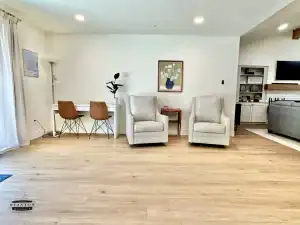
LVP flooring installation DFW


Engineered Hardwood

Engineered hardwood is a real wood product — a genuine hardwood veneer bonded to multiple layers of plywood or high-density fiberboard. It looks and feels like solid hardwood but is significantly more dimensionally stable in variable humidity environments. For the DFW area, it is generally the smarter wood flooring choice over solid hardwood in most applications.


Durability: Durable under normal residential use. Surface scratches and dents like solid hardwood — harder species like white oak, hickory, and maple outperform softer species. Can be lightly sanded and refinished two to three times depending on veneer thickness.


Fort Worth Climate: Holds a clear advantage over solid hardwood in our market. The cross-ply construction resists cupping, gapping, and buckling from North Texas humidity swings. Requires 48 to 72 hours acclimation before installation. Must not be installed below grade or in areas subject to moisture intrusion. A moisture barrier between slab and flooring is required and should never be skipped.


Allergy Considerations: Good choice for allergy-sensitive households. Hard surface traps no allergens. Specify GREENGUARD or FloorScore certified products to address potential VOC off-gassing from core adhesives.


Longevity: 25 to 40 years in a well-maintained, climate-controlled home. Veneer thickness determines refinishing cycles — specify 3mm or above for maximum lifespan.


Resale Value: Real wood floors are consistently cited positively by buyers. Engineered hardwood delivers the warmth and visual appeal of wood with better performance for our climate. A quality installation in main living areas is a meaningful value-add in the DFW market.


Installation: Can be installed floating, glued down, or nailed/stapled depending on product and subfloor. Glue-down or floating over concrete slab is typical. 48 to 72 hours acclimation required. Order 10% overage.


Pricing: $9–$18 per square foot installed. Premium species, wider planks, and custom finishes push toward the higher end.
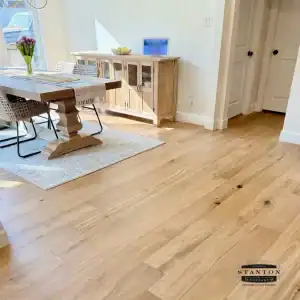
 

Engineered hardwood flooring Fort Worth TX


Solid Hardwood

Solid hardwood is a plank of wood milled from a single piece of timber. It is the most traditional and longest-lasting wood flooring option available, and it carries a premium perception no other product fully replicates. In the right application it is a lifetime floor. In the wrong application — or a home without consistent climate control — it can be a costly problem.


Durability: Can be sanded and refinished six to ten times over its life. A well-maintained solid hardwood floor can look new again decades after installation. Harder species — white oak, hickory, maple, Brazilian cherry — resist scratching and denting better than softer ones.


Fort Worth Climate: The most important conversation before choosing solid hardwood in the DFW area. Solid wood is hygroscopic — it absorbs and releases moisture with the environment. North Texas humidity swings are exactly the conditions that cause cupping in summer and gapping in winter. These are not installation failures — they are the natural behavior of solid wood in a variable humidity environment. Homes maintaining indoor humidity between 35 and 55 percent with no slab moisture issues can support solid hardwood successfully. All others are better served by engineered hardwood. Solid hardwood should never be installed over a concrete slab without a wood subfloor system and cannot be installed below grade.


Allergy Considerations: Excellent for allergy sufferers. Hard smooth surface harbors no allergens. Site-applied finishes should be low-VOC.


Longevity: A generational floor in the right environment. 50 to 100-year-old solid hardwood floors are common in well-maintained homes. Longevity depends entirely on maintaining a stable indoor environment.


Resale Value: The highest resale value impact of any flooring material. Buyers recognize and assign a value premium to solid hardwood. A meaningful differentiator in a competitive DFW listing.


Installation: Requires a wood subfloor — not concrete — typically nail or staple-down over plywood. Acclimation of 3 to 7 days mandatory. Moisture readings of wood and subfloor required before installation. Site-finished solid hardwood requires vacating the home during finishing and 24 to 48 hours afterward due to fumes and dust.


Pricing: $12–$25 per square foot installed for domestic species in standard widths. Wide-plank formats and premium species push toward $20–$35. Site-finishing adds labor cost but allows custom stain and sheen on-site.
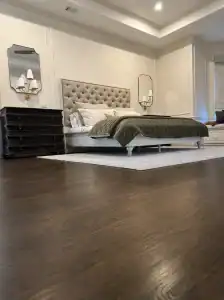
 

Solid hardwood floor installation Fort Worth


Carpet

Carpet is the right choice for specific applications and the wrong choice for others. Bedrooms, media rooms, and bonus rooms where comfort and sound absorption matter are where it performs best. Kitchens, bathrooms, entries, and high-traffic living areas are where it falls short. A thoughtful flooring plan for most Fort Worth homes uses carpet selectively, not universally.


Durability — Fiber Types:

Nylon is the most durable residential fiber — resilient, crush-resistant, and appropriate for high-traffic areas. Polyester (PET) offers excellent stain and fade resistance with a soft feel, and is increasingly made from recycled materials — best for bedrooms and lower-traffic spaces as it compresses more readily than nylon under heavy use. Olefin (polypropylene) is solution-dyed for exceptional fade resistance and resists moisture and mildew well, but is oleophilic — it attracts oil-based soils and can mat down over time in heavy traffic. Triexta (Smartstrand) is a newer fiber offering nylon-level durability with polyester softness. Wool is the premium natural fiber — durable, naturally soil-resistant, and long-lasting, with a significant price premium. Pile construction, twist level, and face weight all affect performance. Quality carpet with proper padding lasts 10 to 15 years in appropriate applications.


Fort Worth Climate: Moisture is the primary concern. Carpet over a damp slab is a mold risk. Moisture testing before installation is important in older homes. Never install carpet in spaces prone to moisture or flooding. In bedrooms and upstairs areas of well-maintained homes the concern is minimal.


Allergy Considerations: Carpet’s most discussed limitation. Fibers trap dust, dander, and pollen that accumulate between cleanings. Some research suggests carpet may reduce airborne allergens by trapping rather than circulating them — provided it is vacuumed regularly with a HEPA-filter vacuum. For households with severe allergies or asthma, hard surface flooring is the better recommendation.


Longevity: 10 to 15 years in appropriate applications; 7 to 10 in high-traffic areas or stairs. The shortest lifespan of all materials covered here. Cannot be refinished — replacement is the only option.


Resale Value: Neutral to mildly positive in bedrooms. Increasingly a negative in main living areas where buyers expect hard surfaces. Worn, stained, or dated carpet should be replaced before listing — even a neutral mid-grade product almost always pays off.


Installation: Stretched over tack strip and padding. More forgiving of minor subfloor imperfections than hard surface products. Seaming requires skill in large or irregular rooms. Immediately livable after installation — no drying or cure time. Manufactured in 12-foot widths; rooms wider than that require a seam. Padding quality matters as much as carpet quality.


Pricing: $4–$10 per square foot installed including pad and installation for quality residential products. Premium wool pushes above that range. The most cost-effective option for bedrooms and secondary spaces.
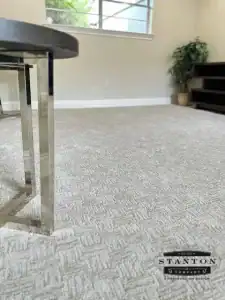
Carpet flooring Fort Worth TX – Stanton & Co.


A Quick Side-by-Side Reference

Every home and every homeowner is different, but as a general reference for Fort Worth-area remodels:


  • Best for moisture resistance and DFW climate performance: Porcelain tile
  • Best natural stone for high-traffic floors: Granite tile
  • Best natural stone for luxury and elegance: Marble or travertine in the right application
  • Best value for a wood-look floor: LVP
  • Best wood floor for the DFW climate: Engineered hardwood
  • Best long-term investment in the right application: Solid hardwood
  • Best for comfort and sound absorption in bedrooms: Carpet
  • Highest resale value impact: Solid hardwood, followed by natural stone and engineered hardwood
  • Lowest maintenance: Porcelain tile and LVP
  • Best for allergy-sensitive households: Porcelain tile, natural stone, LVP, or hardwood — avoid carpet
  • Shortest lifespan: Carpet (10–15 years)
  • Longest lifespan: Porcelain tile, natural stone, and solid hardwood (50+ years in the right conditions)
  • Most climate-sensitive material: Solid hardwood — requires consistent indoor humidity management
  • Requires acclimation before installation: LVP (48 hours), engineered hardwood (48–72 hours), solid hardwood (3–7 days)


How We Help You Choose

Flooring selection involves more variables than most homeowners expect — your foundation type, the rooms being floored, how you live in the space, your household’s needs, and what the rest of your design looks like all factor into the right recommendation. What works in a Southlake home with a wood subfloor and consistent climate control may be the wrong choice for an older slab-on-grade home in Benbrook with humidity challenges.


At Stanton & Co., flooring selection happens at our Design Center & Showroom on Camp Bowie Blvd. in Fort Worth — and it is a true showroom, not a sample board on a wall. We carry an extensive selection across all flooring categories covered in this blog: porcelain tile in a wide range of sizes, formats, and finishes; natural stone tile including granite, marble, and travertine; LVP in dozens of colors, textures, and plank widths; engineered hardwood in multiple species and stain options; solid hardwood selections; and carpet samples across fiber types, pile styles, and price points. Whatever your budget, we have options that perform well and look great within it. Our design consultants help you find the right material for your space, your household, and your price point — not the product with the best margin. You’ll see actual samples at full scale alongside your cabinet, countertop, and hardware selections so every decision gets made together rather than in isolation.


As we’ve noted throughout the BLOGS series, the design phase is where budget is protected and problems are prevented. Flooring decisions made before demolition begins mean no surprises, no change orders, and no delays waiting on product that wasn’t ordered in time.


Ready to Start Planning?

If new flooring is part of your upcoming remodel — whether it’s one room or the whole house — the best first step is a conversation. We’ll come walk your space, assess the conditions, understand what you want, and help you select the right product before anything comes up off the floor.


To schedule a free in-home consultation and estimate, call 817.731.5855 ext. 1 or reach us through our online Contact Form on our website. You can also visit our Design Center at 4824 Camp Bowie Blvd., Fort Worth.


How Much Does a Kitchen Remodel Cost in the Fort Worth, Texas Area?

How Much Does a Bathroom Remodel Cost in the Fort Worth, Texas Area?

What to Expect When You’re Remodeling: A Homeowner’s Complete Preparation Guide

Granite, Quartz, Quartzite, or Marble: Choosing the Right Countertop for Your Fort Worth Remodel


Proudly Serving the DFW Metroplex

Stanton & Company provides full-service residential remodeling, custom cabinetry, countertops, flooring, and design services to homeowners throughout the Dallas–Fort Worth area, including Fort Worth, Benbrook, Aledo, Willow Park, Hudson Oaks, Weatherford, Brock, Keller, the Mid-Cities (Euless, Bedford, Hurst), North Richland Hills, Southlake, Colleyville, Argyle, Arlington, Pantego, Mansfield, Kennedale, Burleson, and Crowley. Visit our Design Center on Camp Bowie Blvd. or call 817.731.5855 ext. 1 to schedule a consultation.

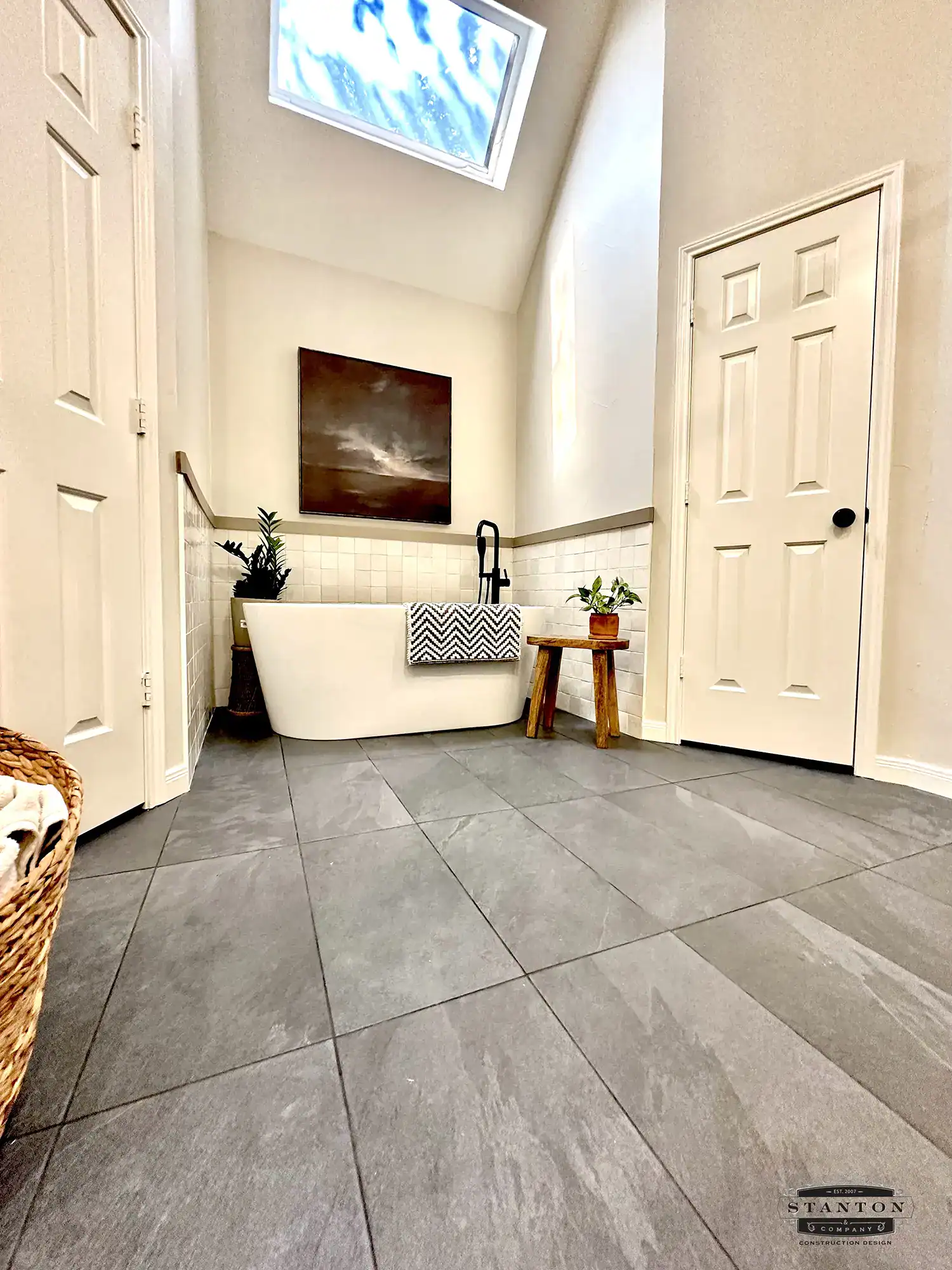
Granite, Quartz, Quartzite, or Marble: Choosing the Right Countertop for Your Fort Worth Remodel

If you’ve ever researched countertop materials and tried to make sense of the differences between granite, quartz, quartzite, and marble, you’re not alone. It’s one of the most common points of confusion we encounter during the design phase with homeowners across Fort Worth, Keller, Southlake, Arlington, Aledo, and the surrounding area. The names sound similar, some of the looks overlap, and the pricing can vary dramatically — which makes the decision feel harder than it needs to be.


There are many countertop materials available today — each has its place depending on the project, the budget, and the homeowner. But granite, quartz, quartzite, and marble are the four materials that come up in the vast majority of our kitchen and bathroom remodel conversations. They represent a wide range of price points, performance characteristics, and aesthetics, and understanding the differences between them will help you make a decision you’re still satisfied with years down the road.


As we’ve noted in our Kitchen Remodel Cost and Bathroom Remodel Cost blogs, countertop selection is one of the most impactful decisions in any remodel — both visually and financially. This blog goes deeper on the four main materials: what each one is, what it does well, where it falls short, how it’s installed, and what you should expect to pay in our market.


Granite

Granite is a natural igneous stone quarried from the earth. It has been the standard in residential kitchen and bathroom remodeling for decades, and for good reason — it is hard, durable, heat-resistant, and available in an enormous range of colors and patterns. No two granite slabs are identical, which means your countertop is genuinely one of a kind. Fort Worth homeowners have been choosing granite for a long time, and it remains one of the most requested materials we work with.


Pros:

  • Extremely hard and durable — highly resistant to scratches and heat
  • Natural stone — every slab is unique in pattern and coloration
  • Wide variety of colors, from subtle whites and grays to dramatic blacks and browns
  • Proven long-term performance in high-use kitchens
  • Generally the most affordable of the four natural stone options


Cons:

  • Porous — requires sealing at installation and periodic resealing over time
  • Can be susceptible to staining if spills are not wiped up promptly
  • Pattern matching between slabs on large installations requires careful planning
  • Some exotic or highly figured varieties can carry a premium price


Installation:

Granite is cut to template at a fabrication shop and installed in slabs. The process begins with a precise template of your cabinets — either a physical template or a digital laser measure — which is sent to the fabricator for cutting. The slabs are then transported to the jobsite and set in place with adhesive and mechanical fasteners where needed. Seams are filled and polished to minimize visibility. For large kitchens with islands or L-shaped layouts, seam placement is an important conversation to have with your designer and fabricator before cutting begins — once a slab is cut, the decision is made. Granite’s weight requires that cabinets be fully installed and level before countertop installation begins. The stone must be sealed immediately after installation and periodically thereafter to maintain its resistance to staining.


Pricing:

As noted in our Kitchen Remodel Cost and Bathroom Remodel Cost blogs, granite runs $75–$125 per square foot installed in the Fort Worth market. More exotic varieties with dramatic figuring or rare coloration can push above that range. It is consistently the most accessible entry point into natural stone.


Quartz

Quartz countertops are an engineered stone product, not a purely natural material. They are manufactured by combining roughly 90 to 95 percent ground natural quartz with resins, polymers, and pigments. The result is a non-porous, highly consistent surface that mimics the look of natural stone while eliminating some of its maintenance requirements. Brands like Vicostone, Daltile One Quartz, Corian, and Caesarstone have made quartz one of the dominant countertop choices in the DFW market, and it is the material we specify most often at the mid-range and upper-mid-range price point.


Pros:

  • Non-porous — does not require sealing and resists staining effectively
  • Highly consistent appearance — easier to match across multiple slabs
  • Available in a wide range of colors and patterns, including designs that closely replicate marble
  • Hard and durable surface resistant to scratches under normal use
  • Low maintenance compared to natural stone


Cons:

  • Not heat-resistant — hot pans placed directly on the surface can damage the resin and cause discoloration; trivets are necessary
  • Engineered product — lacks the depth and variation of a natural stone slab
  • UV sensitivity — prolonged direct sunlight exposure can cause fading or discoloration over time, which is a consideration for outdoor or sunlit applications
  • Cannot be used outdoors


Installation:

Quartz is fabricated and installed using the same general process as granite — template, shop fabrication, and on-site installation. Because quartz is manufactured to consistent thickness and density, it is somewhat more predictable to work with than natural stone. Seams, edge profiles, and cutouts for sinks and cooktops are all handled at the fabrication stage. One important distinction: because quartz contains resins, it cannot be cut or ground on-site without specialized equipment and creates significant dust. All cutting must happen at the shop. The non-porous surface means no sealing is required at installation or afterward, which simplifies the finishing process.


Pricing:

Quartz runs $75–$125 per square foot installed, consistent with what we’ve outlined in our Kitchen and Bathroom Remodel Cost blogs. Premium designer brands and larger format slabs can push toward the higher end of that range and beyond.


Quartzite

Quartzite is a natural metamorphic stone — sandstone that has been transformed under intense heat and pressure deep in the earth into one of the hardest natural stones available for countertop use. It is frequently confused with quartz because of the similar name, but the two materials are entirely different. Quartz is manufactured; quartzite is pulled from the earth as a natural slab. Quartzite typically presents in soft whites, creams, and grays with dramatic linear veining that makes it one of the most visually striking countertop options available. It has become increasingly popular among Fort Worth homeowners pursuing a high-end, natural aesthetic — particularly the modern farmhouse and transitional styles we see most often in Keller, Aledo, Southlake, and Weatherford.


Pros:

  • One of the hardest natural stones available — highly resistant to scratching and etching compared to marble
  • Dramatic, natural veining that closely resembles marble in appearance
  • Heat-resistant as a natural stone
  • Each slab is unique — no two quartzite countertops are the same
  • Holds up well in high-use kitchen environments when properly sealed


Cons:

  • Porous — requires sealing at installation and periodic resealing, similar to granite
  • Quality varies by source — some quartzite varieties on the market are softer and more porous than others; slab sourcing matters
  • Harder to fabricate than granite or quartz due to its density, which can increase fabrication costs
  • Premium price point — among the more expensive countertop options
  • Limited availability of certain varieties compared to granite or quartz


Installation:

Quartzite is installed using the same template-and-fabricate process as granite, but its exceptional hardness makes it more demanding on equipment and labor. Diamond-tipped blades and specialized tooling are required throughout the fabrication process. The extra hardness that makes quartzite so durable is the same property that makes it more time-consuming and costly to cut and finish. Seam placement requires the same careful planning as granite, and the stone’s natural veining means slab orientation and matching are important aesthetic decisions that should be made during the design phase — not on installation day. Sealing is required at completion.


Pricing:

As referenced in both our Kitchen and Bathroom Remodel Cost blogs, quartzite lands at the premium end of the countertop range: $125–$200 per square foot installed. Rare or highly figured varieties can exceed that range. The combination of material cost, fabrication complexity, and sourcing makes quartzite the investment choice among the four materials covered here.


Marble

Marble is a natural metamorphic stone and one of the oldest and most recognized luxury materials in the world. Its white or cream backgrounds, soft movement, and bold veining have defined high-end interiors for centuries. In residential remodeling, marble is most commonly specified for bathroom vanities, master bath features, and as a statement material in kitchens where the homeowner understands and accepts its maintenance requirements. It is a beautiful material — and an honest conversation about its practical limitations is part of every countertop discussion we have at Stanton & Co.


Pros:

  • Timeless, high-end aesthetic that no engineered product fully replicates
  • Unique natural variation — no two slabs are the same
  • Stays cool to the touch — a traditional favorite for baking surfaces and pastry applications
  • Dramatically increases the perceived luxury of a space
  • Available in a wide range of varieties from classic Carrara to more dramatic Calacatta and Statuario


Cons:

  • Soft and porous compared to granite and quartzite — susceptible to etching from acidic substances including citrus juice, wine, vinegar, common household cleaners, and even water
  • Stains more readily than any of the other three materials if not sealed and maintained properly
  • Requires the most diligent ongoing maintenance of the four materials
  • Etching — the dull marks left by acid contact — is a permanent alteration to the surface that cannot be cleaned away; it requires professional honing or polishing to address
  • Not recommended for high-traffic kitchen surfaces for homeowners who are not prepared for its care requirements


Installation:

Marble is fabricated and installed in the same manner as granite and quartzite — template, shop cut, and field installation. It is softer than both granite and quartzite, which makes it easier to cut and fabricate, but it also makes it more vulnerable during the installation process itself. Chips and scratches during handling are a real risk that experienced fabricators take precautions against. Because marble is so reactive to acidic substances, the work area must be kept clean during installation and the surface must be sealed immediately upon completion. Sealing frequency depends on use and the specific variety of marble, but for kitchen applications it is typically recommended annually. The finish — polished versus honed — is an important upfront decision: a honed finish is more forgiving of etching because it starts matte, while a polished finish shows etch marks more visibly but can be restored to its original sheen by a stone professional.


Pricing:

Marble falls in the same range as quartzite: $125–$200 per square foot installed, as established in our Kitchen and Bathroom Remodel Cost blogs. Classic Carrara marble tends to sit at the lower end of the natural stone premium range. More sought-after varieties like Calacatta Gold or Statuario can climb well above $200 per square foot installed depending on slab availability and current market conditions.


As a Backsplash — Something to Consider During Design

Most countertop conversations focus on the horizontal surface — but the same natural stone and quartz materials we use on countertops can be used vertically as a backsplash, and the result is one of the most refined and seamless looks available in a kitchen remodel. A full slab backsplash eliminates the grout lines and visual interruption of tile, creating a continuous flow of material from the countertop surface up the wall. It is an upscale application that works particularly well with dramatic quartzite or marble veining, where the movement of the stone can be showcased across an unbroken vertical plane.


There is one important technical distinction in a vertical slab application: thickness. Most countertops we install are 3cm material — the standard thickness for a horizontal surface that must support weight and withstand daily use. When the same material is mounted on a wall, we most often specify 2cm instead. The thinner profile reduces the weight of the installation significantly, which makes the wall mounting process more manageable and eliminates the bulkiness that a 3cm slab can present on a vertical surface. The pricing of the slab material and its installation is consistent with what you would pay for the same material on a countertop — while the thickness change may slightly reduce the slab cost, the fabrication and installation labor involved in a vertical application is comparable.


This is a decision best made during the design phase, not after countertops are already selected. When the backsplash and countertop are cut from the same slab, the veining and color match seamlessly — an effect that is impossible to achieve after the fact. If a slab backsplash is something you’re considering, bring it up early in your design consultation so we can account for the additional material in your slab selection and ensure the layout works across both surfaces.


Additional Option – Butcher Block

Butcher block is a material not often used, but is one we have successfully installed in kitchens in the area.  Butcher block is unique and not for every kitchen — and that’s exactly what makes it the right choice for some of them. Made from strips of hardwood glued together and finished to a smooth, workable surface, butcher block brings warmth and character that no stone or engineered product can replicate. We’ve built custom butcher block countertops for clients who wanted a section of natural wood on an island, a dedicated prep area with a different feel from the perimeter countertops, or a kitchen that leans fully into a natural, handcrafted aesthetic. It’s a material that rewards homeowners who understand what they’re getting — and how to care for it.


Pros:

  • Warm, natural look that brings texture and character unlike any stone surface
  • Can be sanded and refinished if scratched or stained — a forgiving material over the long term
  • Naturally softer surface is easier on knives and cookware
  • Works exceptionally well as an accent — an island top or a dedicated prep section paired with stone perimeter countertops
  • Custom sizing and edge profiles are straightforward to achieve
  • Mid-range price point — more accessible than premium natural stone


Cons:

  • Requires regular oiling and sealing to maintain the surface and prevent moisture damage
  • More susceptible to water damage, warping, and staining than stone if not maintained
  • Will show knife marks and wear over time — some homeowners appreciate this patina; others do not
  • Not appropriate for installation near a sink or in areas with standing water without proper sealing and ongoing maintenance
  • Heat can scorch or discolor the surface — trivets and hot pads are necessary


Installation:

Butcher block is custom-cut to the dimensions of your space and installed similarly to stone — templated, cut, and set in place. Unlike slab stone, it can be cut and trimmed on-site with standard woodworking equipment, which gives fabricators more flexibility during installation. Cutouts for sinks and cooktops are made with precision saws, and edges are routed and sanded to the desired profile. Because wood moves with changes in humidity, installation technique matters — butcher block should be fastened in a way that allows for natural expansion and contraction rather than being rigidly fixed, which can cause cracking over time. The surface is finished with food-safe oil or a penetrating sealer immediately after installation, and ongoing oiling is part of the maintenance commitment the homeowner takes on.


Pricing:

Butcher block is generally a mid-range countertop material. Installed pricing in the Fort Worth market typically runs $75–$150 per square foot, depending on the wood species, thickness, and complexity of the installation. Common species like maple and oak sit at the lower end of that range. Premium hardwoods like walnut, cherry, or teak push toward the higher end — and fully custom end-grain butcher block in a specialty wood can reach $200 or more per square foot. For homeowners adding butcher block to an island or a single section of countertop rather than the full kitchen, the overall investment is quite manageable.


A Quick Side-by-Side Reference

Every homeowner’s situation is different, but as a general reference:


  • Best for durability and low maintenance: Quartz
  • Best for budget-conscious natural stone: Granite
  • Best for natural stone hardness with a marble-like look: Quartzite
  • Best for timeless luxury aesthetic: Marble (with the right homeowner)
  • Best for warmth, character, and a natural wood feel: Butcher block
  • Requires sealing: Granite, quartzite, marble, and butcher block — quartz does not
  • Heat-resistant: Granite, quartzite, and marble — quartz and butcher block are not
  • Most forgiving in a busy kitchen: Quartz
  • Can be refinished if damaged: Butcher block only
  • Highest investment: Quartzite and marble


How We Help You Choose

The slab you choose can cover a large portion of your most-used surfaces and it deserves to be evaluated in person with your other selections beside it. At Stanton & Co., we understand the importance of this design decision. You’ll work directly with our design consultants on your decisions. We discuss your household, your habits, how you use your kitchen or bathroom, and what matters most to you in a surface. That conversation shapes the recommendation. We don’t push a material based on margin — we help you choose the one that fits your life and your budget.


We have numerous top-of-the-line quartz displays at our Design Center & Showroom on Camp Bowie Blvd. in Fort Worth, so selections for quartz are simple and convenient. If your preference is natural material, we will schedule an appointment and even accompany you to one of the local stone warehouses we use so you can see the full slab in person. You will make your selection on-site, then we will save a photo to your file to assist in selecting all coordinating materials at our Design Center.


As we’ve noted in our Kitchen Remodel Cost blog, the design phase is where budgets are protected. Making your countertop selection — including slab choice — before construction begins means no mid-project changes, no timeline extensions, and no surprises on the final invoice.


Ready to Start Planning?

If a kitchen or bathroom remodel is on your horizon and countertop selection feels overwhelming, the best first step is a conversation. We’ll walk you through the options in person, help you understand the real-world performance of each material, and build a design plan with a line-item estimate before any work begins.


To schedule a free in-home consultation and estimate, call 817.731.5855 ext. 1 or reach us through our online Contact Form on our website. You can also visit our Design Center at 4824 Camp Bowie Blvd., Fort Worth.


How Much Does a Kitchen Remodel Cost in the Fort Worth, Texas Area?

How Much Does a Bathroom Remodel Cost in the Fort Worth, Texas Area?

Contact Stanton & Company for a Quote


Proudly Serving the DFW Metroplex

Stanton & Company provides full-service residential remodeling, custom cabinetry, countertops, flooring, and design services to homeowners throughout the Dallas–Fort Worth area, including Fort Worth, Benbrook, Aledo, Willow Park, Hudson Oaks, Weatherford, Brock, Keller, the Mid-Cities (Euless, Bedford, Hurst), North Richland Hills, Southlake, Colleyville, Argyle, Arlington, Pantego, Mansfield, Kennedale, Burleson, and Crowley. Visit our Design Center on Camp Bowie Blvd. or call 817.731.5855 to schedule a consultation.

What to Expect When You’re Remodeling: A Homeowner’s Complete Preparation Guide

Starting a remodel is exciting — new kitchen, refreshed bathroom, beautiful new flooring, a dream outdoor living space, or a home addition that finally gives your family the room you need. But for most homeowners, the remodeling process comes with a lot of unknowns. What will happen to your routine? What do you need to do before the crew arrives? What should you actually expect day-to-day?

At Stanton & Co., we specialize in occupied residential remodeling. For over 13 years, we’ve guided homeowners through remodels across Fort Worth, Keller, Southlake, Colleyville, Mansfield, Arlington, Benbrook, Aledo, and throughout the Tarrant County areas. We’ve heard just about every question you can imagine — and we want to answer as many as possible right here so you can walk into your remodel feeling confident and prepared.

Before the First Crew Member Arrives: Getting Your Home Ready

Before your kitchen remodel begins, completely empty your cabinets, drawers, and pantry — dishes, appliances, food, and anything stored under the sink. Even cabinets that aren’t being replaced are vulnerable to the dust and vibration that construction generates. Use this time to donate items you no longer use. Many homeowners are surprised how much they declutter during a remodel. Pack your kitchen essentials — coffee maker, a few plates, microwave, paper goods — in a bin and set up a temporary station in a spare room or dining area.

Any furniture in rooms being remodeled should be moved out before work begins. This includes rugs, décor, wall art, and anything fragile or valuable. Depending on scope, furniture can sometimes be moved to the center of the room and covered. For flooring projects, everything on the floor needs to be cleared. For bathroom remodels, personal items on counters, in cabinets, and on shelving should all be removed. If you have heavy furniture you can’t move on your own, let us know in advance — we can include furniture moving in the contract. This is something to address during your pre-construction meeting, not the morning work begins.

Even rooms not directly involved in the remodel can be affected by dust and debris. We take precautions to minimize the spread, but remodeling is a construction process. We recommend covering furniture in nearby rooms with old sheets or plastic sheeting and removing fragile or valuable items from adjacent spaces before work begins. Where there is an opening to an adjacent space, we use plastic and zipper-walls to protect those areas as much as possible.

Floor protection is handled as part of our standard process. The path required to move our workers from entry to work area is always taken into account. Any flooring that will not be removed in the renovation is carefully protected with cushioned, protective covering — this prevents soiling on carpet and scuffs and marks on hard surfaces.


Dumpsters, Materials, and Site Logistics

Stanton & Co. handles dumpster and debris removal coordination. Depending on the scope of your project, we will either arrange for a roll-off dumpster on your property or manage debris haul-away directly. We’ll discuss logistics with you during the project planning phase. If you live in an HOA community, there may be restrictions on dumpster placement. We’re experienced working in communities throughout Keller, Southlake, Colleyville, and other HOA-governed areas around Fort Worth and will help you navigate any community guidelines.

Stanton & Co. can source all materials for your project — tile, cabinetry, countertops, flooring, fixtures, hardware, and more. We have relationships with trusted suppliers and can often source materials at better pricing than retail. At our Design Center & Showroom on the historic bricks of Camp Bowie Blvd., we carry hundreds of material choices. There is never a requirement to supply your own materials, as we coordinate the ordering, shipping, receiving, warehousing, and delivery right to the jobsite.

That said, some homeowners prefer to supply certain items themselves — a special-order tile, a specific faucet brand, custom cabinetry sourced independently. We’re flexible. Just communicate what you’re supplying and what you’d like us to source so we can plan accordingly. If you’re supplying your own materials, they need to be on-site and ready before your project start date. Delays in materials are one of the most common causes of timeline extensions.

Materials we order are stored in our warehouse at our Fort Worth business office until installation. Materials you order are stored at your home. Luxury Vinyl Plank, for example, must be acclimated to your home for 48 hours before installation — that means the boxes need to be brought inside to adjust to your temperature and humidity. This step is critical to a successful installation. Tile and similar materials will be moved to a designated area at your home — a garage or covered patio — prior to installation. Your Project Manager will go over all of this at your pre-construction meeting.

Our crews typically park in your driveway or on the street in front of your home. If you have specific preferences — such as keeping a lane of the driveway clear for your own vehicles — let us know ahead of time and we’ll communicate that to the crew.


Living in Your Home During the Remodel

In most cases, you can stay in your home while the remodel is happening. We specialize in occupied residential remodeling. For kitchen and bathroom remodels, flooring projects, and most additions, homeowners typically remain in their homes during construction, and we do our best to minimize disruption to your daily routine. That said, there are situations where temporarily relocating is a better option — whole-home renovations, major structural additions, or projects with significant dust and noise levels. We’ll be upfront about this during your pre-construction consultation.

Honest answer on dust: yes, some is inevitable. Cutting tile, removing drywall, sanding, and general construction all generate dust. We use dust barriers and protective coverings to contain it to the work area as much as possible, but some migration will occur. Replace air filters after project completion, close or cover vents in nearby rooms during active demo phases, and plan for a deep clean when the project wraps. We offer a post-construction cleaning service and find that most clients use it. Our cleaning crew is experienced with construction dust removal — it typically takes a few weeks for all dust to fully settle, but each cleaning reduces the level significantly.

Our crews are professional, respectful, and courteous in your home. If a restroom is needed during the workday, crew members may ask to use one. We ask our teams to be mindful and leave things better than they found them. If you have a preference about which restroom they use, or would prefer a portable restroom on-site, just let us know. We can make that accommodation in your contract, and for longer projects, a portable restroom on site may be arranged.

Depending on scope, there may be brief interruptions to utilities. Kitchen and bathroom remodels often require water to be shut off temporarily during plumbing rough-in or fixture installation. Electrical work may require circuit shutdowns for portions of the day. We always give advance notice before any planned utility interruptions so you can plan accordingly. Our licensed plumbers and electricians work efficiently to minimize downtime.


Project Timelines: What to Expect

Project timelines vary depending on scope. As a general guide:

  • Bathroom remodel: 3–5 weeks, depending on size and scope
  • Kitchen remodel: 3–6 weeks, longer for full gut remodels
  • Flooring installation: 1–5 days, depending on square footage
  • Outdoor living space (deck, patio, pergola): 1–3 weeks
  • Home addition: 6–16 weeks, depending on size and complexity

These are estimates. Every project is unique, and factors like material lead times, permit timelines, and project complexity can all affect the schedule. We’ll give you a realistic timeline estimate before work begins and keep you updated throughout.


Communication, Access, and Daily Routines

Our crews generally work during standard business hours — arriving between 7:30 and 8:00 a.m. and wrapping up by 4:30 to 5:00 p.m., Monday through Friday. Your assigned Project Manager will confirm expected hours with you at the project start. If you have a specific scheduling constraint — needing crews out by a certain time, or not before a certain hour — communicate that upfront. We do our best to accommodate reasonable scheduling needs.

You don’t need to be home every day, but you’ll need to arrange access. We typically use a lockbox with a key on the door of your choosing. We take security and trust seriously — our team members are vetted professionals and we maintain clear accountability throughout the project. We do recommend being present at key milestone moments: demo day, any decisions on tile layout or material placement, and the final walkthrough. Having a clear point of contact ensures any questions that arise mid-project can be resolved quickly without delaying work.

Your Project Manager is your dedicated point of contact from start to finish. We’ll update you on progress, flag any unexpected issues promptly, and be available to answer questions as they come up. Clear, consistent communication throughout the project is something we take seriously.

Remodeling older homes in the Fort Worth area — including Benbrook, Weatherford, Arlington, and other established neighborhoods — sometimes reveals hidden issues: outdated wiring, plumbing that doesn’t meet current code, subfloor damage under old flooring, unexpected mold or water damage, or even termites. When something unexpected comes up, we stop, assess, and bring it to you immediately. We explain what was found, what needs to happen, and what it means for timeline and budget. We don’t proceed without your knowledge and approval. Transparency is core to how we operate.


Kids, Pets, and Noise

Pets can get stressed by noise and construction activity, and open doors create escape risks. We strongly recommend securing pets in a room or area away from the work zone during working hours. Some clients choose to board their pets for portions of a major remodel, particularly during demo phase when noise and disruption are at their highest. Let our crew know at the start of the project that you have pets, and we’ll be extra mindful about keeping exterior doors closed and avoiding designated pet areas.

Construction sites — even inside your home — are not safe environments for young children to wander through. Sharp debris, open tool cases, exposed materials, and active power tools are all present during a remodel. We ask that young children be kept away from the work area during active construction hours. For families across Fort Worth, Mansfield, Argyle, Azle, and the surrounding area, even a beautiful project comes with a temporary period that requires extra supervision.

Remodeling is loud. Demo work, tile cutting, nail guns, saws — there’s no getting around it. We try to cluster the loudest work earlier in the day when possible. If you work from home, plan ahead: you may need headphones, a different room, or a day offsite during the loudest phases. Let us know your situation and we’ll plan accordingly.


Inspections, Walkthroughs, and the Punch List

A punch list is the final list of small items that need to be addressed before a project is officially complete — touching up paint, adjusting a cabinet hinge, caulking a small gap, installing a final piece of trim. This is a normal and expected part of any remodel. At Stanton & Co., we walk through the completed project with you and document anything that needs attention. We don’t consider a job done until the punch list is cleared.

Before we close out your project, we do a thorough final walkthrough together. This is your opportunity to inspect everything, ask questions, and confirm every detail meets your expectations. We go room by room, check finishes, run fixtures, test functionality, and confirm everything is exactly as planned. Your satisfaction is the finish line — not the last day of work.


Stanton & Co. Remodels All of This — and More

Whether you’re planning a kitchen remodel, bathroom renovation, new flooring, an outdoor living space, or a full home addition, Stanton & Co. is a full-service residential remodeling general contractor serving Fort Worth and surrounding communities. We use all qualified tradespeople and licensed electricians and plumbers as required by the State of Texas. Working with Stanton & Co. means one company coordinating every trade from start to finish — no chasing down separate subs, no miscommunication between trades.

At the time we sign paperwork and take a deposit to get started, we go over your invoice line-by-line, the materials to be used, and an Acknowledgement Sheet that covers all of the items discussed above and more — so there are no surprises before, during, or after your remodel.


Ready to Start Planning?

If a remodel is something you’re seriously thinking about, the best next step is a conversation. We’ll come walk your space, talk through what you want, and give you a real answer based on your actual home and your actual goals — not a generalized estimate pulled from an online calculator.

Schedule a free in-home consultation online or visit our Design Center at 4824 Camp Bowie Blvd., Fort Worth. Call 817.731.5855 ext. 1.


Proudly Serving the DFW Metroplex

Stanton & Company provides full-service residential remodeling, custom cabinetry, countertops, flooring, and design services to homeowners throughout the Dallas–Fort Worth area, including Fort Worth, Benbrook, Aledo, Willow Park, Hudson Oaks, Weatherford, Brock, Keller, the Mid-Cities (Euless, Bedford, Hurst), North Richland Hills, Arlington, Pantego, Mansfield, Burleson, and Crowley. Visit our Design Center on Camp Bowie Blvd. or call 817.731.5855 to schedule a consultation.

How Much Does a Bathroom Remodel Cost in the Fort Worth, Texas Area?

Your bathroom is probably the first room you step into every morning and the last one you visit at night. When it’s outdated, cramped, or just plain tired, it grates on you in a way few other rooms do. So, when homeowners in Fort Worth, Aledo, Keller, Mansfield, and across the DFW area start thinking about a remodel, the bathroom is often at the top of the list — and the first question is almost always the same: What’s this going to run me?


We’ve remodeled bathrooms of every size and style across the metroplex, from tub-to-shower conversions in Benbrook to full spa-inspired owner’s suites in Weatherford. Here’s a straight look at what bathroom remodels actually cost in our market and where the money goes.

Typical Bathroom Remodel Costs in the Fort Worth Area

Most bathroom projects we complete fall into one of four tiers, based on scope and the level of customization involved:


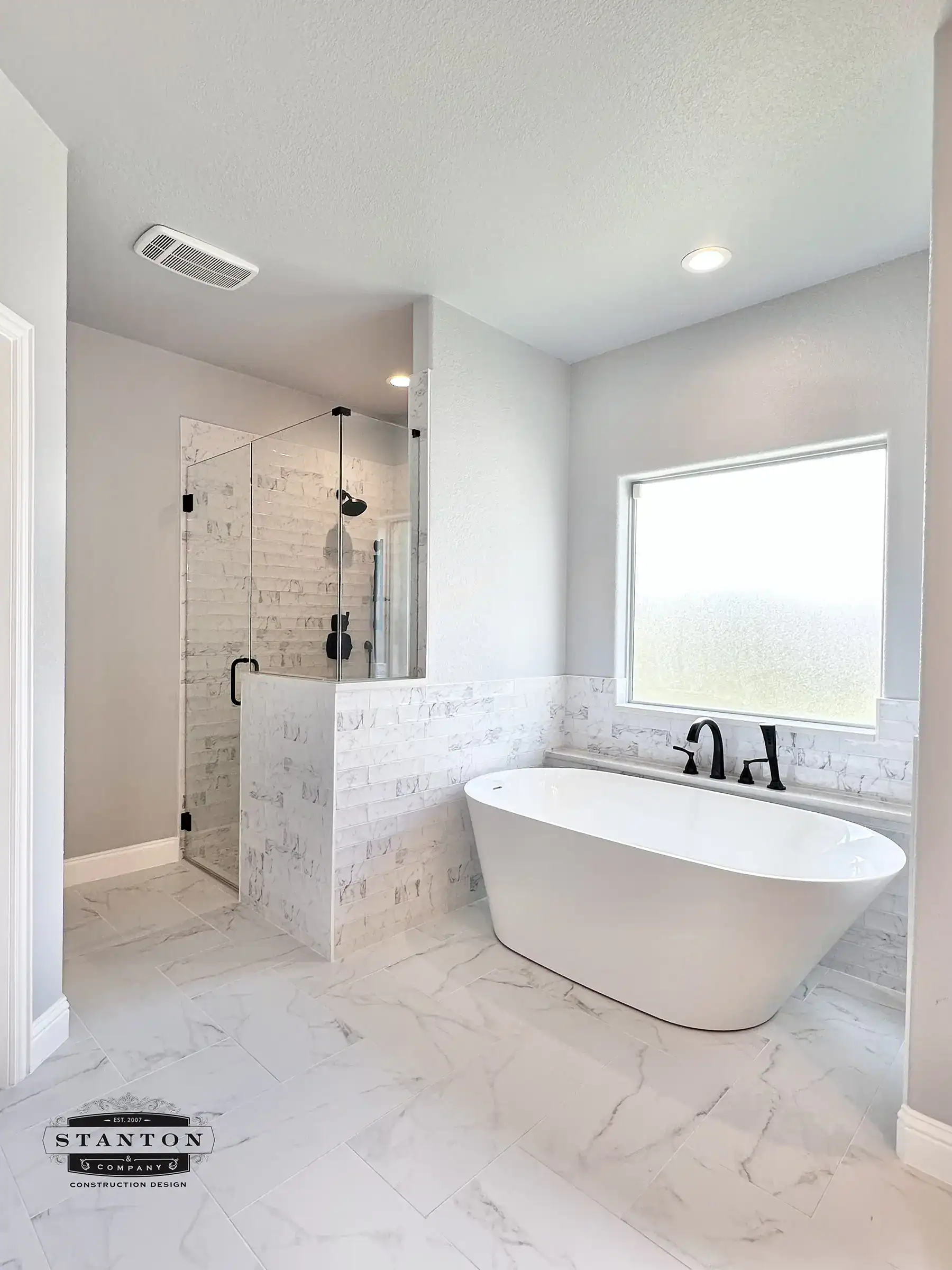
Cosmetic Refresh: $10,000 – $20,000

Cosmetic Refresh bathroom from Stanton and Company

A cosmetic refresh keeps the bathroom’s layout and plumbing exactly where it is. What changes is everything you can see — a new vanity, updated countertop, modern faucets, new mirror and lighting, fresh paint, maybe new floor tile, and a new toilet. The shower and tub stay put. This is a great fit for homeowners who are happy with how their bathroom functions but want it to look and feel like a 2026 space instead of one stuck in 2005. It’s the fastest path to a meaningful transformation without touching plumbing or framing.  If we are doing a guest bathroom, then a tub-to-shower conversion is something that may work into this budget.


Mid-Range Remodel: $20,000 – $45,000

Mid range bathroom remodel by Stanton and CompanyMid Range Bathroom remodel with Shower and tub - from Stanton and Company

The mid-range tier is where most of our bathroom projects land. At this level, the shower is usually the centerpiece — whether it’s a tub-to-shower conversion or a full walk-in shower with frameless glass, tile from floor to ceiling, built-in niches, and a bench. You may also see a refaced vanity with soft-close hinges and drawers, upgraded countertops in granite, quartz, or quartzite, new tile or wood-look tile flooring, updated lighting, and fresh fixtures throughout. Homeowners in Arlington, Burleson, Hudson Oaks, and the Mid-Cities typically land here when they want a bathroom that feels brand new — not just refreshed.

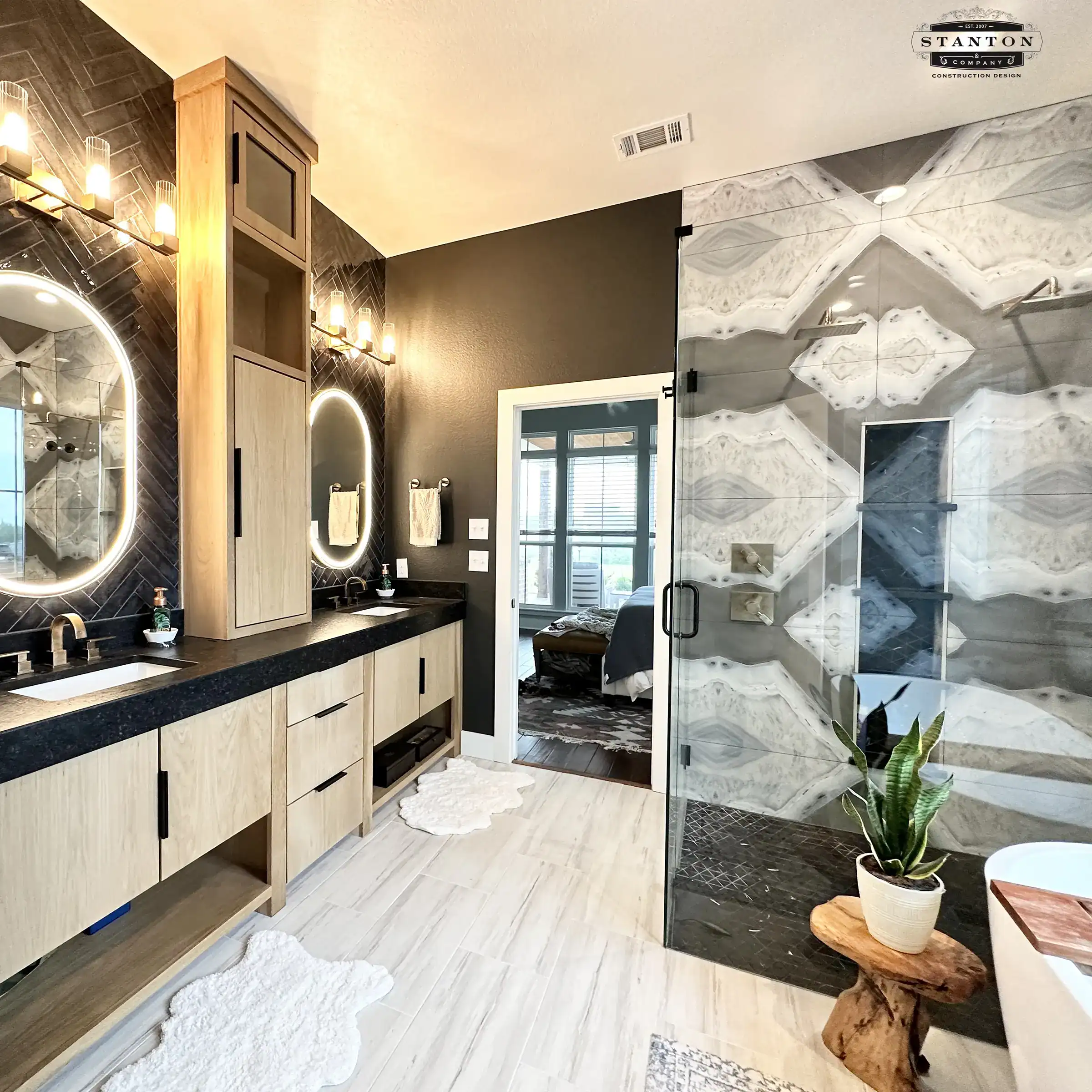
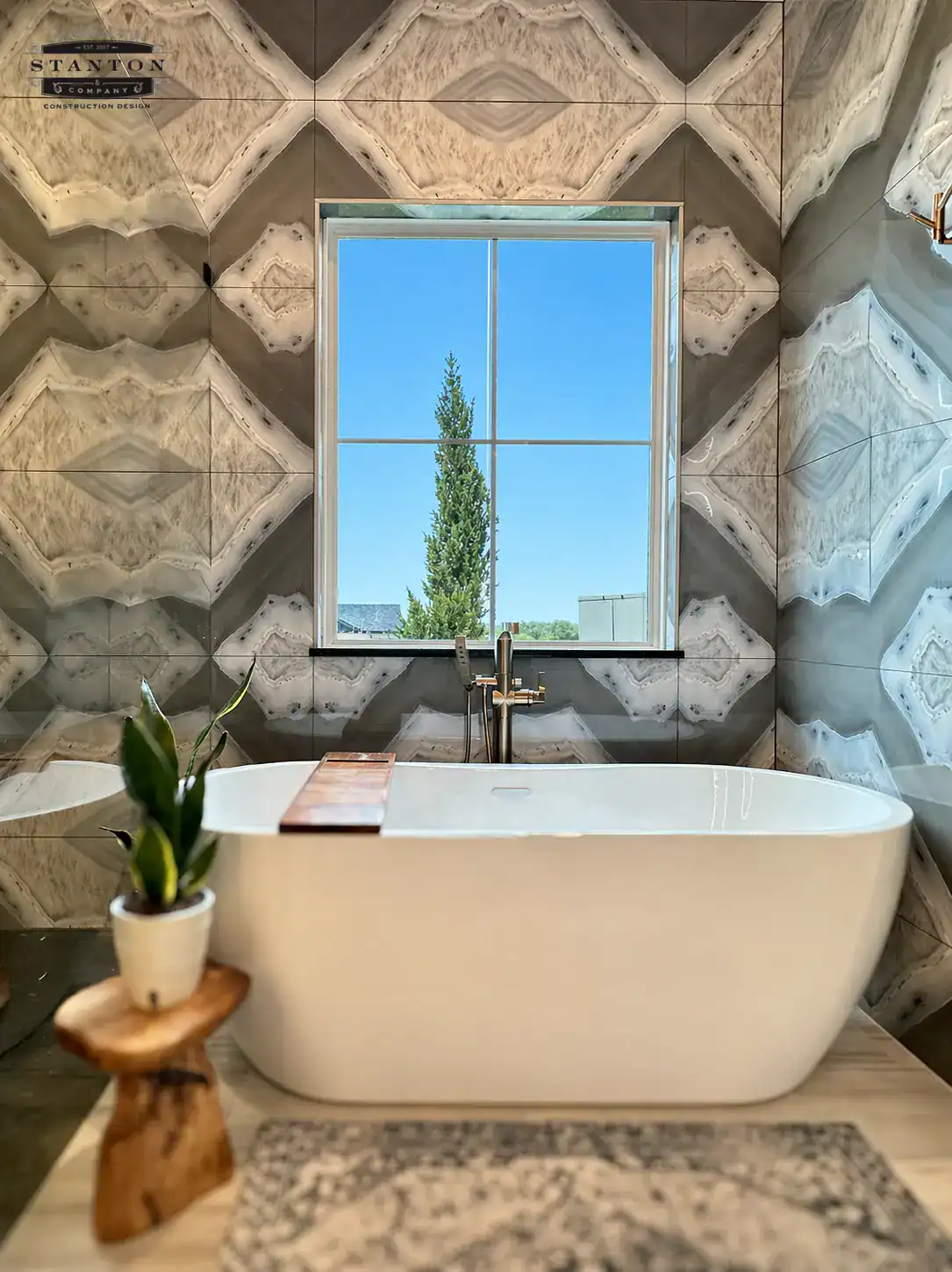
High-End / Full Gut: $45,000 – $95,000

High end bathroom remodel from Stanton and CompanyTub from high end bathroom remodel from Stanton and Company


A full gut renovation rebuilds the bathroom from the studs out. Layouts get reconfigured, walls may move, footprints might expand into adjacent closets or rooms, and plumbing gets relocated. This is where you see freestanding soaking tubs, curbless walk-in showers with multiple heads and body sprays, double vanities with custom cabinetry, heated tile floors, and premium materials like marble, quartzite, or large-format porcelain running wall to wall. We’ve built projects at this level for clients in Aledo, Keller, Willow Park, and Fort Worth who wanted an owner’s suite bathroom that felt like a private retreat. The combinations we’re seeing most often in 2026 blend brushed gold fixtures, marble-look porcelain, frameless glass, and warm custom wood vanities.


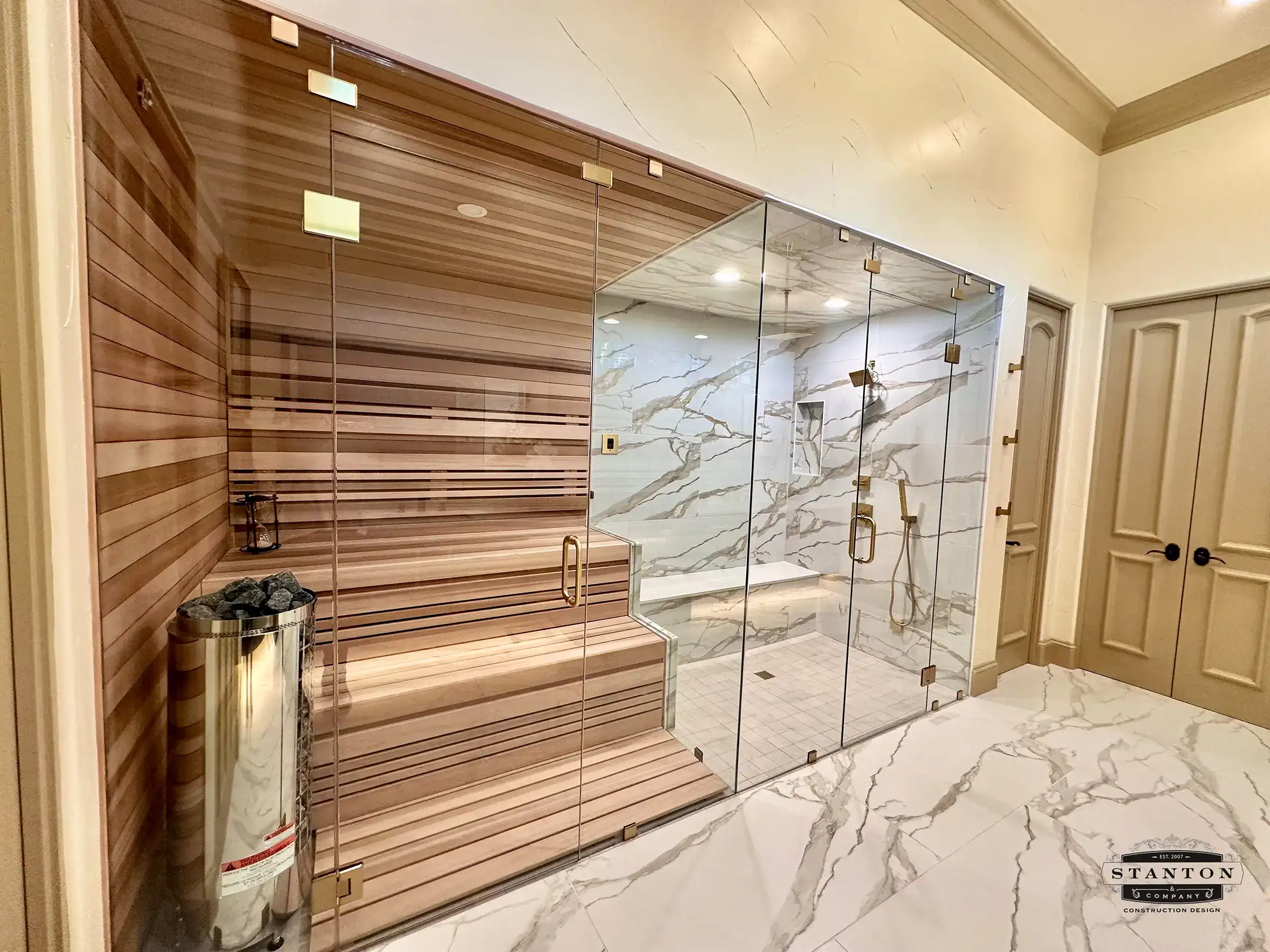
Luxury Spa: $95,000+

Luxury Spa Remodel from Stanton and Company - Sauna and ShowerLuxury Spa Remodel from Stanton and Company


For the customers who do have the budget and the space required, an in-home spa is the pinnacle of luxury. We have provided lavish, magazine-worthy spaces with top-of-the-line amenities for those who want this.  This type of remodel is usually a full-gut, replacing the same items as in the high-end renovation, but adding in opulent features, such as a full steam shower, rain head and body sprays, dry sauna, floor to ceiling glass and tile, floating vanities with under-cabinet lighting, exotic countertops, and top of the line, large format tile.


A Quick Reality Check

Most bathroom remodels we complete in Fort Worth land between $15,000 and 65,000, depending on scope of work and finishes. If you’re seeing numbers online that are dramatically lower, they’re usually missing key pieces like project management, licensed trades, or true full-scope construction. A quote that looks too good almost always is.


A Recent Project Example

A recent primary bathroom project in Aledo included removing a confined, small shower and relocating it to the space where we removed a large garden tub.  New plumbing and a relocated drain was required to accommodate the new location.  We built two pony walls with a center entrance and topped with frameless glass. There was a large window over the former garden tub.  We shrunk the window size and raised the sill to take advantage of the indirect natural light.  The former shower location became a large floor to ceiling linen closet with many shelves and doors for ample storage. The two vanities were replaced with custom, shaker-style, painted cabinets with a quartz countertop. Within the vanities are hidden outlet drawers. Recessed lights were added, as well as new vanity lighting.  An updated exhaust fan was also added. Both vanities got new mirrors.  There is new tile in the shower and on the bathroom floor. The entire bathroom was painted. The total investment was just under $43,000. For Stanton & Co, this cost falls on the upper end of a mid-range bathroom remodel.


What Drives the Cost?

Pricing varies because every bathroom is different — and because the decisions you make about layout, materials, and fixtures have a bigger impact on the final number than you might expect. Here’s where the dollars go:


  • Plumbing and layout: Relocating a toilet, shower, or tub is one of the most expensive single decisions in a bathroom remodel. New supply and drain lines mean opening walls and floors, which drives labor hours and material costs. If you keep everything where it is, you save significantly.
  • Shower construction: A straightforward tub-to-shower conversion runs roughly $7,000–$10,000. A custom tiled walk-in shower with frameless glass, a bench, niches, and premium tile can push $10,000–$25,000 or more. Features like curbless entries, rain heads, body sprays, and multiple shower heads each add cost but also define the experience.
  • Custom vanities: Every vanity we build is custom, and every vanity comes standard with soft-close hinges and full-extension soft-close drawers. Depending on size, wood species, finish, and whether it’s a single or double, expect anywhere from $3,500 to $15,000+. Floating vanities and integrated built-ins sit at the higher end.
  • Countertops: Quartz and granite run around $55–$100 per square foot installed. Quartzite and marble land at $100–$200+. Because bathroom vanities use far less square footage than kitchens, the total countertop line item is usually manageable even with premium stone.
  • Tile: Standard porcelain tile runs $8–$15 per square foot installed. Large-format tile, marble-look porcelain, and natural stone climb to $15–$40+. Tile is a labor-heavy category — the installation often costs more than the material itself, especially for detailed patterns or full wall-to-ceiling applications.
  • Fixtures and lighting: A basic fixture package (faucets, shower head, towel bars, sconces) runs $1,500–$4,000. Step up to premium brands like Kohler, Brizo, or Rohl and the number easily reaches $6,000–$12,000+.
  • Electrical and ventilation: Heated floors, new exhaust fans, updated lighting, and additional outlets are common adds. If your home needs an electrical panel upgrade or updated venting, that’s an extra line item.


ADA and Accessible Bathrooms

For every bathroom remodel, Stanton & Co meets with each homeowner to assess their needs. Homes that require special considerations for an accessible bathroom need the homeowner or caregiver to specify their exact requirements, and we will build to that specification.  For a person needing to renovate to allow them to “age-in-place,” a conversation with the end-user or their caregiver is best to ascertain all requirements.  Whether it’s simply extra space, curbless entry, and grab bars, or an enlarged bench and turning radius within the shower, or a walk-in tub, we work to accommodate the specific needs of each homeowner. Accessible design isn’t a template — it’s a conversation about how you or your loved one actually uses the space, and we build around those details.


How to Get an Accurate Estimate

There’s no shortcut to a real number. Online calculators and national averages can get you in the ballpark, but they don’t account for your home’s actual conditions, the DFW labor market, or the specific materials you’ll choose. The only way to know what your bathroom will actually cost is to have someone walk through it with you.


Our process starts with an in-home consultation. Stanton Pearce — the owner — comes to your home personally, measures the space, listens to what you want, and provides a free estimate with allowances built in for the finishes you haven’t yet selected. If you decide to move forward, the next step is an appointment at our Design Center on Camp Bowie Blvd. There you’ll work directly with our design consultants to make decisions about all of your materials — all in one place, with everything laid out in front of you. By the time the design plan is finalized, you have a line-item estimate with no unknowns and no surprises. Homeowners drive in from Crowley, Pantego, North Richland Hills, Denton, Aledo, and across the metroplex because of the convenience and to avoid driving all over to source materials themselves.


A Few Tips to Protect Your Budget

A little planning on the front end goes a long way toward keeping a bathroom remodel on track financially. A few things we recommend to every homeowner:


  • Decide what you can’t live without. Is it the walk-in shower? The freestanding tub? The double vanity? The tile? Knowing your top priorities before you start lets your designer allocate the budget where it actually matters to you.
  • Commit to the design phase. It’s tempting to rush through selections and get to construction, but almost every over-budget project we’ve ever seen traces back to changes made mid-build. The Design Center visit exists to eliminate that risk.
  • Build a cushion. Bathrooms are the most surprise-prone room in the house. Hidden water damage, outdated plumbing, rotted framing, mold — none of it shows up until walls are opened. A 10–15% contingency turns a crisis into a line item.
  • Understand what’s in the estimate — and what isn’t. A real remodeling estimate includes demolition, construction, materials, labor, plumbing, electrical, paint, trim, project management, and cleanup. If a number looks shockingly low, ask which of those pieces is missing.


How to Protect Yourself When Choosing a Remodeler

The bathroom you end up with has as much to do with who you hire as what you buy. Before you sign anything, get clear answers to these questions:


  • Are the trades licensed? Texas law requires electrical and plumbing work to be performed by licensed professionals. If a contractor is sending unlicensed help into your home for that work, your warranty, your insurance, and your safety are all on the line. Ask for license numbers — and actually verify them.
  • Is there general liability insurance on the job? If something goes wrong during construction — a burst pipe, an electrical fire, a workplace accident — liability insurance is what protects your home from turning into a legal problem. A certificate of insurance takes five minutes to produce. If a contractor can’t, walk away.
  • Who’s handling the structural work? Moving walls, expanding footprints, or altering framing isn’t a DIY job. Make sure whoever is swinging hammers on your structure has done it before and carries the appropriate coverage.
  • Is there a dedicated project manager? A bathroom remodel pulls in electricians, plumbers, tile setters, cabinet installers, countertop fabricators, painters, and trim carpenters. Without one person coordinating all of it, the schedule slips, the quality drifts, and communication breaks down. A real remodeling company assigns a project manager to every job.


The lowest bid usually wins on price and loses on everything else. Unlicensed labor, missing insurance, no project management, and no accountability six months later — that’s what a rock-bottom number often buys. The difference between a full-service remodeling company and three guys with a truck shows up long after the check has cleared.


Ready to Start Planning?

If a bathroom remodel is something you’re seriously thinking about within the next 6–12 months, the best next step is a conversation. We’ll come walk your space, talk through what you want, and give you a real number based on your actual home and your actual goals — not a range pulled from an online calculator.


Schedule a free in-home consultation or visit our Design Center at 4824 Camp Bowie Blvd., Fort Worth. Call 817.731.5855 ext. 1 or through the contact form on our website.


Proudly Serving the DFW Metroplex

Stanton & Company provides full-service residential remodeling, custom cabinetry, countertops, flooring, and design services to homeowners throughout the Dallas–Fort Worth area, including Fort Worth, Benbrook, Aledo, Willow Park, Hudson Oaks, Weatherford, Brock, Keller, the Mid-Cities (Hurst, Euless, Bedford), North Richland Hills, Arlington, Pantego, Mansfield, Burleson, and Crowley. Visit our Design Center on Camp Bowie Blvd. or call 817.731.5855 ext. 1 to schedule a consultation.  You can also reach us through the contact form on our website.
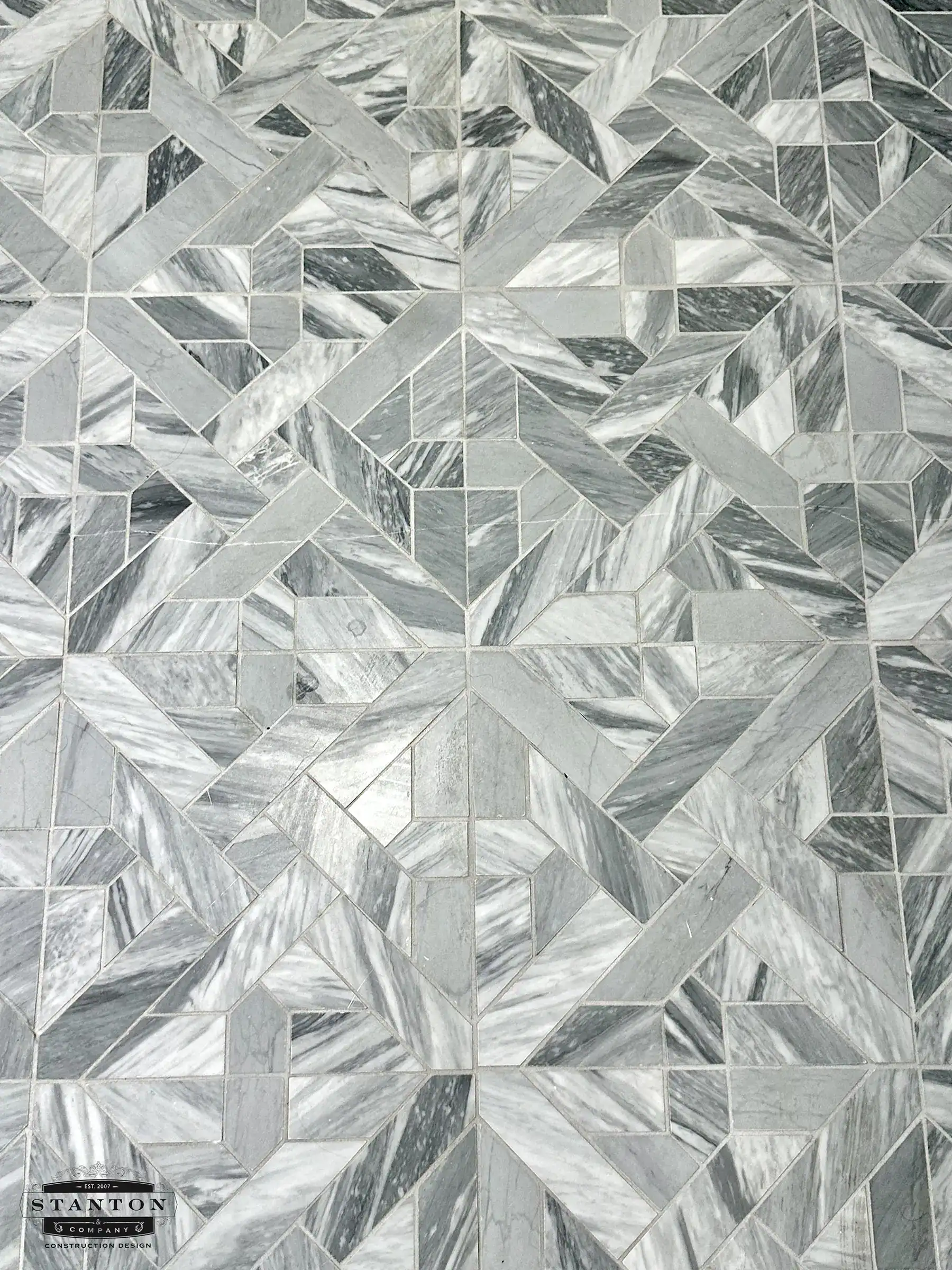
How Much Does a Kitchen Remodel Cost in the Fort Worth, Texas Area?

If you’re thinking about remodeling your kitchen in Fort Worth — or anywhere across the DFW metroplex from Benbrook to Arlington to Aledo — one of the first questions on your mind is probably “what is this going to cost me?” It’s a fair question, and the honest answer is: it depends. But that doesn’t mean we can’t give you realistic numbers to work with.

After thousands of kitchen projects across the Fort Worth area, from Keller to Mansfield to Weatherford, here’s what we’ve seen in terms of real-world pricing and what drives those numbers up or down.


Typical Kitchen Remodel Costs in the Fort Worth Area

Kitchen remodels in the DFW area generally fall into three tiers:

Cosmetic Refresh: $15,000 – $35,000

This covers surface-level updates without changing the layout. Think new countertops, cabinet refacing or painting, updated backsplash, new hardware, and maybe a new sink and faucet. The bones stay the same. This is a good option for homeowners in Willow Park, Hudson Oaks, or Mansfield who like their kitchen’s footprint but want a fresh, modern look — maybe swapping out dated tile for large format porcelain tile or updating to a quartz or granite countertop.

Kitchen Remodeling by Stanton & Company - Fort Worth and surrounding areas

Mid-Range Remodel: $35,000 – $75,000

This is where most of our Fort Worth and surrounding area clients land. A mid-range remodel typically includes custom cabinetry with soft-close hinges and drawers, countertops in granite, quartz, or quartzite, updated appliances, new flooring (hardwood or LVP), under-cabinet lighting, and possibly some minor layout changes like removing a small wall or relocating a sink. Many clients in Arlington, Burleson, and the Mid-Cities choose this level when they want a kitchen that looks and functions significantly different from what they started with.

Kitchen Remodeling by Stanton & Company - Fort Worth and surrounding areas

High-End / Full Gut: $75,000 – $150,000+

A full gut renovation changes everything: layout, plumbing, electrical, walls, cabinetry, appliances, flooring, and finishes. This often includes opening up the kitchen to an adjacent living space for an open concept conversion, adding a waterfall island where one didn’t exist, relocating the range or refrigerator, and specifying custom cabinetry and premium finishes throughout. We’ve done projects like this across Fort Worth, Aledo, Keller, and Weatherford for clients who want a completely transformed space. A modern farmhouse kitchen with white cabinets, quartzite countertops, brushed gold fixtures, mosaic backsplash, and engineered hardwood flooring is one of the most popular high-end combinations we’re seeing right now.

Kitchen Remodeling by Stanton & Company - Fort Worth and surrounding areas

What Drives the Cost?

No two kitchens are the same, which is why pricing varies. Here are the biggest factors that move the number:

Layout changes and open concept conversions: Moving plumbing and electrical is one of the most expensive parts of any kitchen remodel. Removing a wall to create an open floor plan requires structural evaluation and potentially new beams. If you’re keeping the sink, dishwasher, and range in their current locations, you’ll save significantly.

Custom cabinetry: This is typically the single largest line item. Custom cabinetry — which should always include soft-close hinges and full-extension soft-close drawers as standard — can range from $15,000 to $40,000+ depending on style, wood species, finish, and quantity. A butler’s pantry or walk-in pantry adds additional cabinet cost but is one of the most requested features we see.

Countertops: Laminate runs $15–$30 per square foot installed. Quartz and granite run $75–$125+. Quartzite and marble are at the premium end at $125–$200 per square foot. A waterfall island edge — where the countertop material continues down the sides of the island — adds material cost but creates a dramatic focal point.

Appliances: A standard appliance package runs $3,000–$8,000. Professional-grade appliances (Wolf, Sub-Zero, Thermador) can easily reach $15,000–25,000+.

Flooring: LVP (luxury vinyl plank), tile, and hardwood all have different price points. Wood look tile has become extremely popular for kitchen floors because it combines the warm look of wood with the durability and water resistance of porcelain. Expect $5–$15 per square foot installed, depending on material.

Electrical and lighting: Under-cabinet lighting, pendant lights over an island, and recessed lighting upgrades are common adds. If your home’s electrical panel needs updating to support new appliances, that’s an additional cost.

Scope creep: Once walls are opened up, surprises happen. Old plumbing, outdated wiring, water damage, or structural issues can add 10–15% to the project cost. A good full-service remodeler builds contingency into the estimate.


How to Get an Accurate Estimate

Online cost calculators and national averages can give you a rough idea, but they don’t account for the DFW labor market, local material pricing, or the specific conditions of your home. The best way to get an accurate number is to sit down with a remodeling professional who can walk your space, understand what you want, and give you a detailed, line-item estimate.

At Stanton & Company, our process starts with an in-home consultation and measure from our owner, Stanton Pearce. We provide an estimate, free of charge, with allowances for finishes. Once a customer decides to proceed, they make an appointment at our Design Center and Showroom on Camp Bowie Blvd. in Fort Worth. Our design consultants walk through your goals, explore your style and finishes preferences, discuss countertop options, look at flooring samples from hardwood to LVP to tile, and build a completely customized design plan with a line-item estimate before any work begins. No surprises. Homeowners come from across the metroplex — Crowley, Pantego, North Richland Hills, Euless, and beyond — because having a one-stop design center makes the selection process dramatically easier.


A Few Tips to Protect Your Budget

Know your non-negotiables before you start. What matters most — the layout, the finishes, the appliances? This helps allocate the budget where it counts.

Don’t skip the design phase. Spending time in a showroom making selections upfront avoids costly changes mid-construction. This is especially important for materials like countertops, where slab selection is a crucial building block.

Build in a contingency of 10–15%. Even well-planned projects encounter the unexpected. Having a buffer means an unforeseen electrical issue or plumbing surprise doesn’t blow up your budget.

Ask about the full scope. A good full-service remodeling company will include demolition, construction, materials, labor, plumbing, electrical, paint, trim, project management, and cleanup in their estimate — not just the pretty finishes.


How to Protect Yourself When Choosing a Remodeler

A kitchen remodel is a significant investment, and not every company quoting your project is equipped to do it right. Before signing with anyone, ask these questions:

Are your electricians and plumbers licensed and insured? In Texas, electrical and plumbing work must be performed by licensed professionals. An unlicensed crew doing this work puts your home, your safety, and your warranty at risk. Ask for license numbers and verify them.

Does the general contractor carry general liability insurance? If something goes wrong during construction — water damage, a fire, an accident — general liability insurance protects you. Ask for a certificate of insurance, not just a verbal confirmation.


Who is doing the framing and structural work? If your project involves moving walls, adding beams, or modifying your home’s structure, the crew doing that work needs to be experienced and insured. This is not a place to cut corners.

Will I have a dedicated project manager? A kitchen remodel involves coordinating multiple trades — electrical, plumbing, framing, cabinetry, countertops, flooring, paint, and trim. Without a project manager overseeing the schedule, the quality, and the communication, things fall through the cracks.

It can be tempting to go with the lowest bid, but in remodeling, a low price often means unlicensed labor, no insurance, no project management, and no accountability when something goes wrong. The difference between a professional remodeling company and three guys with a truck shows up in the details — and in what happens when there’s a problem six months after the job is done.


Ready to Start Planning?

Whether you’re thinking about a simple refresh or a complete kitchen transformation with custom cabinetry, a waterfall island, and an open concept layout, the first step is the same: have a conversation with someone who does this every day. We’ve been remodeling kitchens across the Fort Worth area for over a decade and we’d be happy to walk you through your options.

Schedule a free design consultation or visit our Design Center at 4824 Camp Bowie Blvd., Fort Worth. Call us at 817.731.5855 ext. 1 or contact us online at www.stantonandcompany.net


Proudly Serving the DFW Metroplex

Stanton & Company provides full-service residential remodeling, custom cabinetry, countertops, flooring, and design services to homeowners throughout the Dallas–Fort Worth area, including Fort Worth, Benbrook, Aledo, Willow Park, Hudson Oaks, Weatherford, Brock, Keller, the Mid-Cities (Euless, Bedford, Hurst), North Richland Hills, Arlington, Pantego, Mansfield, Burleson, and Crowley. Visit our Design Center on Camp Bowie Blvd. or call 817.731.5855 to schedule a consultation.