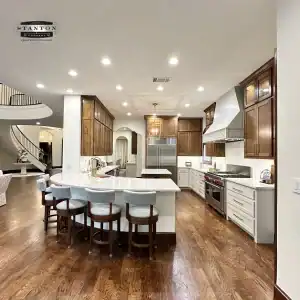
Granite, Quartz, Quartzite, or Marble: Choosing the Right Countertop for Your Fort Worth Remodel

If you’ve ever researched countertop materials and tried to make sense of the differences between granite, quartz, quartzite, and marble, you’re not alone. It’s one of the most common points of confusion we encounter during the design phase with homeowners across Fort Worth, Keller, Southlake, Arlington, Aledo, and the surrounding area. The names sound similar, some of the looks overlap, and the pricing can vary dramatically — which makes the decision feel harder than it needs to be.


There are many countertop materials available today — each has its place depending on the project, the budget, and the homeowner. But granite, quartz, quartzite, and marble are the four materials that come up in the vast majority of our kitchen and bathroom remodel conversations. They represent a wide range of price points, performance characteristics, and aesthetics, and understanding the differences between them will help you make a decision you’re still satisfied with years down the road.


As we’ve noted in our Kitchen Remodel Cost and Bathroom Remodel Cost blogs, countertop selection is one of the most impactful decisions in any remodel — both visually and financially. This blog goes deeper on the four main materials: what each one is, what it does well, where it falls short, how it’s installed, and what you should expect to pay in our market.


Granite

Granite is a natural igneous stone quarried from the earth. It has been the standard in residential kitchen and bathroom remodeling for decades, and for good reason — it is hard, durable, heat-resistant, and available in an enormous range of colors and patterns. No two granite slabs are identical, which means your countertop is genuinely one of a kind. Fort Worth homeowners have been choosing granite for a long time, and it remains one of the most requested materials we work with.


Pros:

  • Extremely hard and durable — highly resistant to scratches and heat
  • Natural stone — every slab is unique in pattern and coloration
  • Wide variety of colors, from subtle whites and grays to dramatic blacks and browns
  • Proven long-term performance in high-use kitchens
  • Generally the most affordable of the four natural stone options


Cons:

  • Porous — requires sealing at installation and periodic resealing over time
  • Can be susceptible to staining if spills are not wiped up promptly
  • Pattern matching between slabs on large installations requires careful planning
  • Some exotic or highly figured varieties can carry a premium price


Installation:

Granite is cut to template at a fabrication shop and installed in slabs. The process begins with a precise template of your cabinets — either a physical template or a digital laser measure — which is sent to the fabricator for cutting. The slabs are then transported to the jobsite and set in place with adhesive and mechanical fasteners where needed. Seams are filled and polished to minimize visibility. For large kitchens with islands or L-shaped layouts, seam placement is an important conversation to have with your designer and fabricator before cutting begins — once a slab is cut, the decision is made. Granite’s weight requires that cabinets be fully installed and level before countertop installation begins. The stone must be sealed immediately after installation and periodically thereafter to maintain its resistance to staining.


Pricing:

As noted in our Kitchen Remodel Cost and Bathroom Remodel Cost blogs, granite runs $75–$125 per square foot installed in the Fort Worth market. More exotic varieties with dramatic figuring or rare coloration can push above that range. It is consistently the most accessible entry point into natural stone.


Quartz

Quartz countertops are an engineered stone product, not a purely natural material. They are manufactured by combining roughly 90 to 95 percent ground natural quartz with resins, polymers, and pigments. The result is a non-porous, highly consistent surface that mimics the look of natural stone while eliminating some of its maintenance requirements. Brands like Vicostone, Daltile One Quartz, Corian, and Caesarstone have made quartz one of the dominant countertop choices in the DFW market, and it is the material we specify most often at the mid-range and upper-mid-range price point.


Pros:

  • Non-porous — does not require sealing and resists staining effectively
  • Highly consistent appearance — easier to match across multiple slabs
  • Available in a wide range of colors and patterns, including designs that closely replicate marble
  • Hard and durable surface resistant to scratches under normal use
  • Low maintenance compared to natural stone


Cons:

  • Not heat-resistant — hot pans placed directly on the surface can damage the resin and cause discoloration; trivets are necessary
  • Engineered product — lacks the depth and variation of a natural stone slab
  • UV sensitivity — prolonged direct sunlight exposure can cause fading or discoloration over time, which is a consideration for outdoor or sunlit applications
  • Cannot be used outdoors


Installation:

Quartz is fabricated and installed using the same general process as granite — template, shop fabrication, and on-site installation. Because quartz is manufactured to consistent thickness and density, it is somewhat more predictable to work with than natural stone. Seams, edge profiles, and cutouts for sinks and cooktops are all handled at the fabrication stage. One important distinction: because quartz contains resins, it cannot be cut or ground on-site without specialized equipment and creates significant dust. All cutting must happen at the shop. The non-porous surface means no sealing is required at installation or afterward, which simplifies the finishing process.


Pricing:

Quartz runs $75–$125 per square foot installed, consistent with what we’ve outlined in our Kitchen and Bathroom Remodel Cost blogs. Premium designer brands and larger format slabs can push toward the higher end of that range and beyond.


Quartzite

Quartzite is a natural metamorphic stone — sandstone that has been transformed under intense heat and pressure deep in the earth into one of the hardest natural stones available for countertop use. It is frequently confused with quartz because of the similar name, but the two materials are entirely different. Quartz is manufactured; quartzite is pulled from the earth as a natural slab. Quartzite typically presents in soft whites, creams, and grays with dramatic linear veining that makes it one of the most visually striking countertop options available. It has become increasingly popular among Fort Worth homeowners pursuing a high-end, natural aesthetic — particularly the modern farmhouse and transitional styles we see most often in Keller, Aledo, Southlake, and Weatherford.


Pros:

  • One of the hardest natural stones available — highly resistant to scratching and etching compared to marble
  • Dramatic, natural veining that closely resembles marble in appearance
  • Heat-resistant as a natural stone
  • Each slab is unique — no two quartzite countertops are the same
  • Holds up well in high-use kitchen environments when properly sealed


Cons:

  • Porous — requires sealing at installation and periodic resealing, similar to granite
  • Quality varies by source — some quartzite varieties on the market are softer and more porous than others; slab sourcing matters
  • Harder to fabricate than granite or quartz due to its density, which can increase fabrication costs
  • Premium price point — among the more expensive countertop options
  • Limited availability of certain varieties compared to granite or quartz


Installation:

Quartzite is installed using the same template-and-fabricate process as granite, but its exceptional hardness makes it more demanding on equipment and labor. Diamond-tipped blades and specialized tooling are required throughout the fabrication process. The extra hardness that makes quartzite so durable is the same property that makes it more time-consuming and costly to cut and finish. Seam placement requires the same careful planning as granite, and the stone’s natural veining means slab orientation and matching are important aesthetic decisions that should be made during the design phase — not on installation day. Sealing is required at completion.


Pricing:

As referenced in both our Kitchen and Bathroom Remodel Cost blogs, quartzite lands at the premium end of the countertop range: $125–$200 per square foot installed. Rare or highly figured varieties can exceed that range. The combination of material cost, fabrication complexity, and sourcing makes quartzite the investment choice among the four materials covered here.


Marble

Marble is a natural metamorphic stone and one of the oldest and most recognized luxury materials in the world. Its white or cream backgrounds, soft movement, and bold veining have defined high-end interiors for centuries. In residential remodeling, marble is most commonly specified for bathroom vanities, master bath features, and as a statement material in kitchens where the homeowner understands and accepts its maintenance requirements. It is a beautiful material — and an honest conversation about its practical limitations is part of every countertop discussion we have at Stanton & Co.


Pros:

  • Timeless, high-end aesthetic that no engineered product fully replicates
  • Unique natural variation — no two slabs are the same
  • Stays cool to the touch — a traditional favorite for baking surfaces and pastry applications
  • Dramatically increases the perceived luxury of a space
  • Available in a wide range of varieties from classic Carrara to more dramatic Calacatta and Statuario


Cons:

  • Soft and porous compared to granite and quartzite — susceptible to etching from acidic substances including citrus juice, wine, vinegar, common household cleaners, and even water
  • Stains more readily than any of the other three materials if not sealed and maintained properly
  • Requires the most diligent ongoing maintenance of the four materials
  • Etching — the dull marks left by acid contact — is a permanent alteration to the surface that cannot be cleaned away; it requires professional honing or polishing to address
  • Not recommended for high-traffic kitchen surfaces for homeowners who are not prepared for its care requirements


Installation:

Marble is fabricated and installed in the same manner as granite and quartzite — template, shop cut, and field installation. It is softer than both granite and quartzite, which makes it easier to cut and fabricate, but it also makes it more vulnerable during the installation process itself. Chips and scratches during handling are a real risk that experienced fabricators take precautions against. Because marble is so reactive to acidic substances, the work area must be kept clean during installation and the surface must be sealed immediately upon completion. Sealing frequency depends on use and the specific variety of marble, but for kitchen applications it is typically recommended annually. The finish — polished versus honed — is an important upfront decision: a honed finish is more forgiving of etching because it starts matte, while a polished finish shows etch marks more visibly but can be restored to its original sheen by a stone professional.


Pricing:

Marble falls in the same range as quartzite: $125–$200 per square foot installed, as established in our Kitchen and Bathroom Remodel Cost blogs. Classic Carrara marble tends to sit at the lower end of the natural stone premium range. More sought-after varieties like Calacatta Gold or Statuario can climb well above $200 per square foot installed depending on slab availability and current market conditions.


As a Backsplash — Something to Consider During Design

Most countertop conversations focus on the horizontal surface — but the same natural stone and quartz materials we use on countertops can be used vertically as a backsplash, and the result is one of the most refined and seamless looks available in a kitchen remodel. A full slab backsplash eliminates the grout lines and visual interruption of tile, creating a continuous flow of material from the countertop surface up the wall. It is an upscale application that works particularly well with dramatic quartzite or marble veining, where the movement of the stone can be showcased across an unbroken vertical plane.


There is one important technical distinction in a vertical slab application: thickness. Most countertops we install are 3cm material — the standard thickness for a horizontal surface that must support weight and withstand daily use. When the same material is mounted on a wall, we most often specify 2cm instead. The thinner profile reduces the weight of the installation significantly, which makes the wall mounting process more manageable and eliminates the bulkiness that a 3cm slab can present on a vertical surface. The pricing of the slab material and its installation is consistent with what you would pay for the same material on a countertop — while the thickness change may slightly reduce the slab cost, the fabrication and installation labor involved in a vertical application is comparable.


This is a decision best made during the design phase, not after countertops are already selected. When the backsplash and countertop are cut from the same slab, the veining and color match seamlessly — an effect that is impossible to achieve after the fact. If a slab backsplash is something you’re considering, bring it up early in your design consultation so we can account for the additional material in your slab selection and ensure the layout works across both surfaces.


Additional Option – Butcher Block

Butcher block is a material not often used, but is one we have successfully installed in kitchens in the area.  Butcher block is unique and not for every kitchen — and that’s exactly what makes it the right choice for some of them. Made from strips of hardwood glued together and finished to a smooth, workable surface, butcher block brings warmth and character that no stone or engineered product can replicate. We’ve built custom butcher block countertops for clients who wanted a section of natural wood on an island, a dedicated prep area with a different feel from the perimeter countertops, or a kitchen that leans fully into a natural, handcrafted aesthetic. It’s a material that rewards homeowners who understand what they’re getting — and how to care for it.


Pros:

  • Warm, natural look that brings texture and character unlike any stone surface
  • Can be sanded and refinished if scratched or stained — a forgiving material over the long term
  • Naturally softer surface is easier on knives and cookware
  • Works exceptionally well as an accent — an island top or a dedicated prep section paired with stone perimeter countertops
  • Custom sizing and edge profiles are straightforward to achieve
  • Mid-range price point — more accessible than premium natural stone


Cons:

  • Requires regular oiling and sealing to maintain the surface and prevent moisture damage
  • More susceptible to water damage, warping, and staining than stone if not maintained
  • Will show knife marks and wear over time — some homeowners appreciate this patina; others do not
  • Not appropriate for installation near a sink or in areas with standing water without proper sealing and ongoing maintenance
  • Heat can scorch or discolor the surface — trivets and hot pads are necessary


Installation:

Butcher block is custom-cut to the dimensions of your space and installed similarly to stone — templated, cut, and set in place. Unlike slab stone, it can be cut and trimmed on-site with standard woodworking equipment, which gives fabricators more flexibility during installation. Cutouts for sinks and cooktops are made with precision saws, and edges are routed and sanded to the desired profile. Because wood moves with changes in humidity, installation technique matters — butcher block should be fastened in a way that allows for natural expansion and contraction rather than being rigidly fixed, which can cause cracking over time. The surface is finished with food-safe oil or a penetrating sealer immediately after installation, and ongoing oiling is part of the maintenance commitment the homeowner takes on.


Pricing:

Butcher block is generally a mid-range countertop material. Installed pricing in the Fort Worth market typically runs $75–$150 per square foot, depending on the wood species, thickness, and complexity of the installation. Common species like maple and oak sit at the lower end of that range. Premium hardwoods like walnut, cherry, or teak push toward the higher end — and fully custom end-grain butcher block in a specialty wood can reach $200 or more per square foot. For homeowners adding butcher block to an island or a single section of countertop rather than the full kitchen, the overall investment is quite manageable.


A Quick Side-by-Side Reference

Every homeowner’s situation is different, but as a general reference:


  • Best for durability and low maintenance: Quartz
  • Best for budget-conscious natural stone: Granite
  • Best for natural stone hardness with a marble-like look: Quartzite
  • Best for timeless luxury aesthetic: Marble (with the right homeowner)
  • Best for warmth, character, and a natural wood feel: Butcher block
  • Requires sealing: Granite, quartzite, marble, and butcher block — quartz does not
  • Heat-resistant: Granite, quartzite, and marble — quartz and butcher block are not
  • Most forgiving in a busy kitchen: Quartz
  • Can be refinished if damaged: Butcher block only
  • Highest investment: Quartzite and marble


How We Help You Choose

The slab you choose can cover a large portion of your most-used surfaces and it deserves to be evaluated in person with your other selections beside it. At Stanton & Co., we understand the importance of this design decision. You’ll work directly with our design consultants on your decisions. We discuss your household, your habits, how you use your kitchen or bathroom, and what matters most to you in a surface. That conversation shapes the recommendation. We don’t push a material based on margin — we help you choose the one that fits your life and your budget.


We have numerous top-of-the-line quartz displays at our Design Center & Showroom on Camp Bowie Blvd. in Fort Worth, so selections for quartz are simple and convenient. If your preference is natural material, we will schedule an appointment and even accompany you to one of the local stone warehouses we use so you can see the full slab in person. You will make your selection on-site, then we will save a photo to your file to assist in selecting all coordinating materials at our Design Center.


As we’ve noted in our Kitchen Remodel Cost blog, the design phase is where budgets are protected. Making your countertop selection — including slab choice — before construction begins means no mid-project changes, no timeline extensions, and no surprises on the final invoice.


Ready to Start Planning?

If a kitchen or bathroom remodel is on your horizon and countertop selection feels overwhelming, the best first step is a conversation. We’ll walk you through the options in person, help you understand the real-world performance of each material, and build a design plan with a line-item estimate before any work begins.


To schedule a free in-home consultation and estimate, call 817.731.5855 ext. 1 or reach us through our online Contact Form on our website. You can also visit our Design Center at 4824 Camp Bowie Blvd., Fort Worth.


How Much Does a Kitchen Remodel Cost in the Fort Worth, Texas Area?

How Much Does a Bathroom Remodel Cost in the Fort Worth, Texas Area?

Contact Stanton & Company for a Quote


Proudly Serving the DFW Metroplex

Stanton & Company provides full-service residential remodeling, custom cabinetry, countertops, flooring, and design services to homeowners throughout the Dallas–Fort Worth area, including Fort Worth, Benbrook, Aledo, Willow Park, Hudson Oaks, Weatherford, Brock, Keller, the Mid-Cities (Euless, Bedford, Hurst), North Richland Hills, Southlake, Colleyville, Argyle, Arlington, Pantego, Mansfield, Kennedale, Burleson, and Crowley. Visit our Design Center on Camp Bowie Blvd. or call 817.731.5855 to schedule a consultation.

How Much Does a Kitchen Remodel Cost in the Fort Worth, Texas Area?

If you’re thinking about remodeling your kitchen in Fort Worth — or anywhere across the DFW metroplex from Benbrook to Arlington to Aledo — one of the first questions on your mind is probably “what is this going to cost me?” It’s a fair question, and the honest answer is: it depends. But that doesn’t mean we can’t give you realistic numbers to work with.

After thousands of kitchen projects across the Fort Worth area, from Keller to Mansfield to Weatherford, here’s what we’ve seen in terms of real-world pricing and what drives those numbers up or down.


Typical Kitchen Remodel Costs in the Fort Worth Area

Kitchen remodels in the DFW area generally fall into three tiers:

Cosmetic Refresh: $15,000 – $35,000

This covers surface-level updates without changing the layout. Think new countertops, cabinet refacing or painting, updated backsplash, new hardware, and maybe a new sink and faucet. The bones stay the same. This is a good option for homeowners in Willow Park, Hudson Oaks, or Mansfield who like their kitchen’s footprint but want a fresh, modern look — maybe swapping out dated tile for large format porcelain tile or updating to a quartz or granite countertop.

Kitchen Remodeling by Stanton & Company - Fort Worth and surrounding areas

Mid-Range Remodel: $35,000 – $75,000

This is where most of our Fort Worth and surrounding area clients land. A mid-range remodel typically includes custom cabinetry with soft-close hinges and drawers, countertops in granite, quartz, or quartzite, updated appliances, new flooring (hardwood or LVP), under-cabinet lighting, and possibly some minor layout changes like removing a small wall or relocating a sink. Many clients in Arlington, Burleson, and the Mid-Cities choose this level when they want a kitchen that looks and functions significantly different from what they started with.

Kitchen Remodeling by Stanton & Company - Fort Worth and surrounding areas

High-End / Full Gut: $75,000 – $150,000+

A full gut renovation changes everything: layout, plumbing, electrical, walls, cabinetry, appliances, flooring, and finishes. This often includes opening up the kitchen to an adjacent living space for an open concept conversion, adding a waterfall island where one didn’t exist, relocating the range or refrigerator, and specifying custom cabinetry and premium finishes throughout. We’ve done projects like this across Fort Worth, Aledo, Keller, and Weatherford for clients who want a completely transformed space. A modern farmhouse kitchen with white cabinets, quartzite countertops, brushed gold fixtures, mosaic backsplash, and engineered hardwood flooring is one of the most popular high-end combinations we’re seeing right now.

Kitchen Remodeling by Stanton & Company - Fort Worth and surrounding areas

What Drives the Cost?

No two kitchens are the same, which is why pricing varies. Here are the biggest factors that move the number:

Layout changes and open concept conversions: Moving plumbing and electrical is one of the most expensive parts of any kitchen remodel. Removing a wall to create an open floor plan requires structural evaluation and potentially new beams. If you’re keeping the sink, dishwasher, and range in their current locations, you’ll save significantly.

Custom cabinetry: This is typically the single largest line item. Custom cabinetry — which should always include soft-close hinges and full-extension soft-close drawers as standard — can range from $15,000 to $40,000+ depending on style, wood species, finish, and quantity. A butler’s pantry or walk-in pantry adds additional cabinet cost but is one of the most requested features we see.

Countertops: Laminate runs $15–$30 per square foot installed. Quartz and granite run $75–$125+. Quartzite and marble are at the premium end at $125–$200 per square foot. A waterfall island edge — where the countertop material continues down the sides of the island — adds material cost but creates a dramatic focal point.

Appliances: A standard appliance package runs $3,000–$8,000. Professional-grade appliances (Wolf, Sub-Zero, Thermador) can easily reach $15,000–25,000+.

Flooring: LVP (luxury vinyl plank), tile, and hardwood all have different price points. Wood look tile has become extremely popular for kitchen floors because it combines the warm look of wood with the durability and water resistance of porcelain. Expect $5–$15 per square foot installed, depending on material.

Electrical and lighting: Under-cabinet lighting, pendant lights over an island, and recessed lighting upgrades are common adds. If your home’s electrical panel needs updating to support new appliances, that’s an additional cost.

Scope creep: Once walls are opened up, surprises happen. Old plumbing, outdated wiring, water damage, or structural issues can add 10–15% to the project cost. A good full-service remodeler builds contingency into the estimate.


How to Get an Accurate Estimate

Online cost calculators and national averages can give you a rough idea, but they don’t account for the DFW labor market, local material pricing, or the specific conditions of your home. The best way to get an accurate number is to sit down with a remodeling professional who can walk your space, understand what you want, and give you a detailed, line-item estimate.

At Stanton & Company, our process starts with an in-home consultation and measure from our owner, Stanton Pearce. We provide an estimate, free of charge, with allowances for finishes. Once a customer decides to proceed, they make an appointment at our Design Center and Showroom on Camp Bowie Blvd. in Fort Worth. Our design consultants walk through your goals, explore your style and finishes preferences, discuss countertop options, look at flooring samples from hardwood to LVP to tile, and build a completely customized design plan with a line-item estimate before any work begins. No surprises. Homeowners come from across the metroplex — Crowley, Pantego, North Richland Hills, Euless, and beyond — because having a one-stop design center makes the selection process dramatically easier.


A Few Tips to Protect Your Budget

Know your non-negotiables before you start. What matters most — the layout, the finishes, the appliances? This helps allocate the budget where it counts.

Don’t skip the design phase. Spending time in a showroom making selections upfront avoids costly changes mid-construction. This is especially important for materials like countertops, where slab selection is a crucial building block.

Build in a contingency of 10–15%. Even well-planned projects encounter the unexpected. Having a buffer means an unforeseen electrical issue or plumbing surprise doesn’t blow up your budget.

Ask about the full scope. A good full-service remodeling company will include demolition, construction, materials, labor, plumbing, electrical, paint, trim, project management, and cleanup in their estimate — not just the pretty finishes.


How to Protect Yourself When Choosing a Remodeler

A kitchen remodel is a significant investment, and not every company quoting your project is equipped to do it right. Before signing with anyone, ask these questions:

Are your electricians and plumbers licensed and insured? In Texas, electrical and plumbing work must be performed by licensed professionals. An unlicensed crew doing this work puts your home, your safety, and your warranty at risk. Ask for license numbers and verify them.

Does the general contractor carry general liability insurance? If something goes wrong during construction — water damage, a fire, an accident — general liability insurance protects you. Ask for a certificate of insurance, not just a verbal confirmation.


Who is doing the framing and structural work? If your project involves moving walls, adding beams, or modifying your home’s structure, the crew doing that work needs to be experienced and insured. This is not a place to cut corners.

Will I have a dedicated project manager? A kitchen remodel involves coordinating multiple trades — electrical, plumbing, framing, cabinetry, countertops, flooring, paint, and trim. Without a project manager overseeing the schedule, the quality, and the communication, things fall through the cracks.

It can be tempting to go with the lowest bid, but in remodeling, a low price often means unlicensed labor, no insurance, no project management, and no accountability when something goes wrong. The difference between a professional remodeling company and three guys with a truck shows up in the details — and in what happens when there’s a problem six months after the job is done.


Ready to Start Planning?

Whether you’re thinking about a simple refresh or a complete kitchen transformation with custom cabinetry, a waterfall island, and an open concept layout, the first step is the same: have a conversation with someone who does this every day. We’ve been remodeling kitchens across the Fort Worth area for over a decade and we’d be happy to walk you through your options.

Schedule a free design consultation or visit our Design Center at 4824 Camp Bowie Blvd., Fort Worth. Call us at 817.731.5855 ext. 1 or contact us online at www.stantonandcompany.net


Proudly Serving the DFW Metroplex

Stanton & Company provides full-service residential remodeling, custom cabinetry, countertops, flooring, and design services to homeowners throughout the Dallas–Fort Worth area, including Fort Worth, Benbrook, Aledo, Willow Park, Hudson Oaks, Weatherford, Brock, Keller, the Mid-Cities (Euless, Bedford, Hurst), North Richland Hills, Arlington, Pantego, Mansfield, Burleson, and Crowley. Visit our Design Center on Camp Bowie Blvd. or call 817.731.5855 to schedule a consultation.