

Your Fall Home Maintenance Checklist for the Fort Worth Area
Fall is one of the best times of year to get ahead of home maintenance. North Texas Falls are short and unpredictable, w …
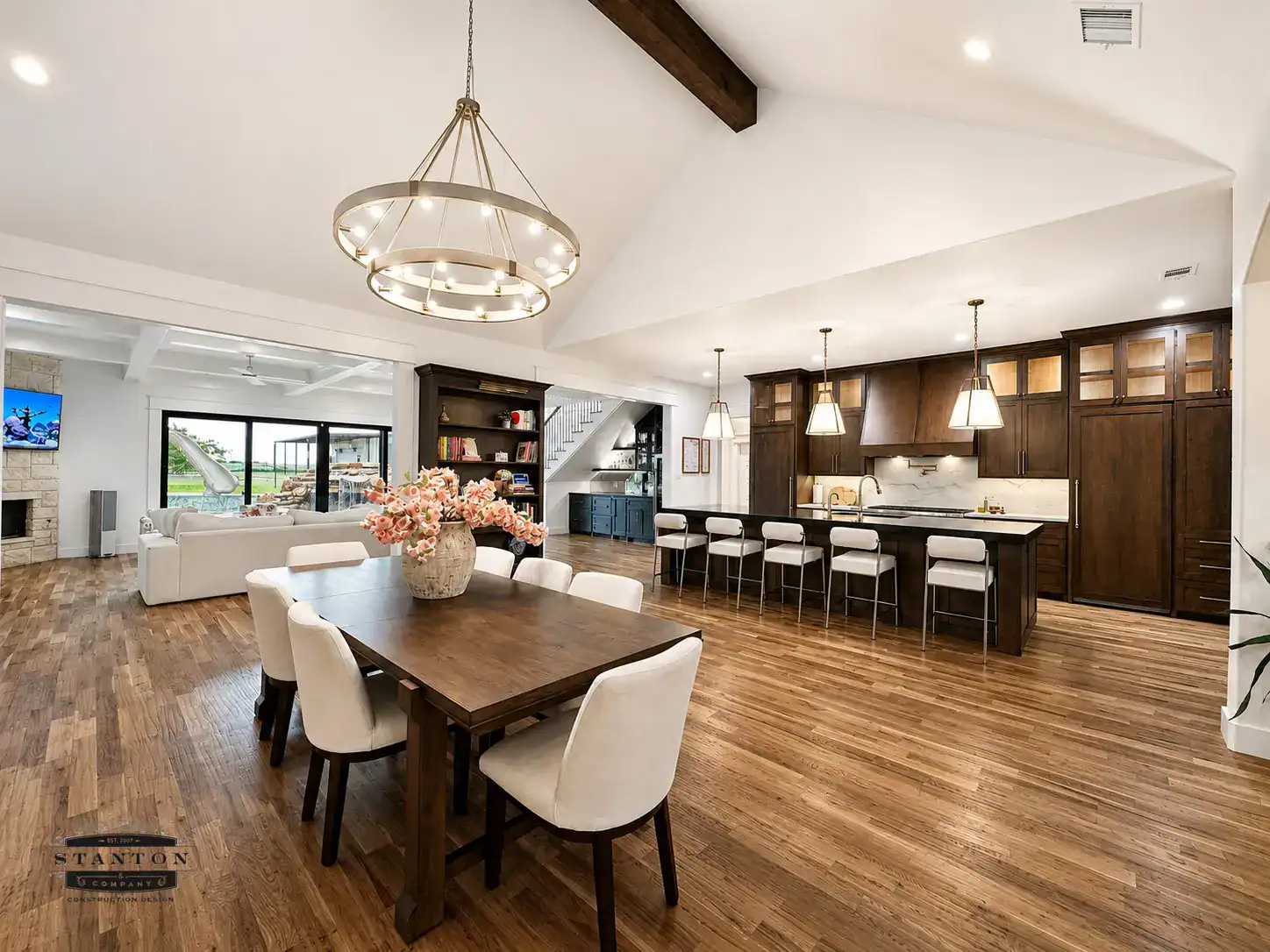
Flooring is one of the most foundational decisions in any remodel. What you choose will affect the look and feel of your home for many years to come. If wood is a consideration for you, but you aren’t sure which will be the best choice for your remodel, read here to see the pros and cons of each material so you can make the best decision for your home.
Both engineered hardwood and solid hardwood deliver the warmth, character, and premium feel of real wood. Both add genuine value to a home. And to the eye, they are virtually indistinguishable once installed. The difference that matters most for homeowners in Fort Worth, Keller, Aledo, Mansfield, and across the DFW area is not only how the floor looks, but how it behaves in a North Texas climate, how it holds up over years of daily use, and what it takes to keep it performing well.
Solid hardwood is a plank milled from a single piece of timber. It is beautiful, durable, and able to be refinished multiple times over its lifespan. It is also hygroscopic — meaning it absorbs and releases moisture from the surrounding air. When indoor humidity rises, wood expands. When it falls, wood contracts. In a climate like Fort Worth’s — hot, humid summers followed by drier winters — that cycle repeats every year.
In homes that do not maintain consistent indoor humidity, the result is cupping in summer (the edges of planks raise above the center) and gapping in winter (visible spaces open between planks). These are not installation failures. They are the natural behavior of solid wood responding to its environment. These issues are difficult to deal with and expensive to fix.
Homes that maintain indoor relative humidity consistently between 35 and 55 percent year-round, with no moisture intrusion from the slab, can support solid hardwood successfully. If you have a whole-home humidification and dehumidification system and consistent climate control, solid hardwood is a legitimate option. If you do not, engineered hardwood is the smarter choice for our market.
One more critical point: solid hardwood cannot be installed over a concrete slab without a wood subfloor system. The vast majority of Fort Worth-area homes sit on slab-on-grade foundations. If your home is slab-on-grade, solid hardwood is not an appropriate specification without first installing a wood subfloor — an added cost that further narrows its practical advantage over engineered.
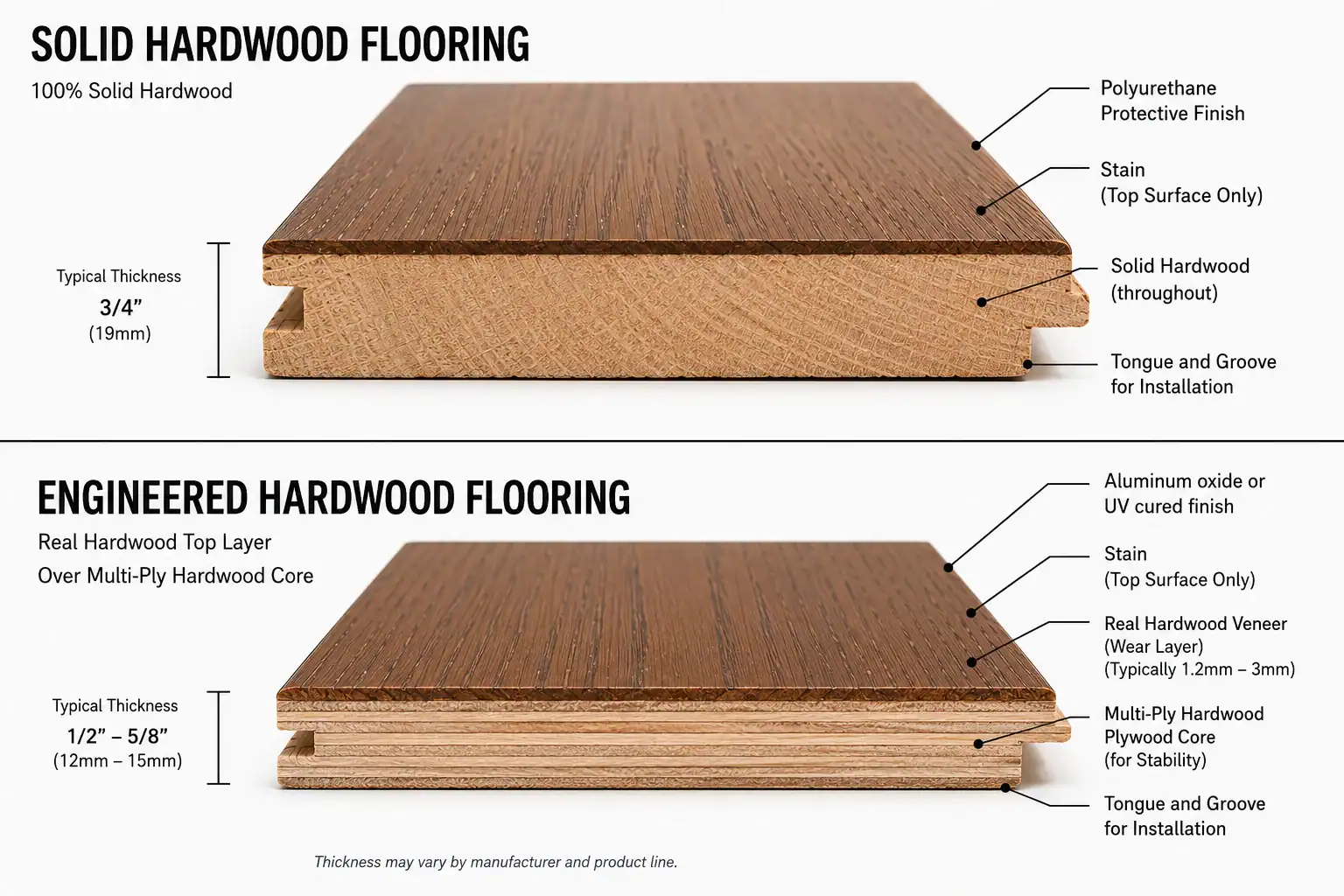
Engineered hardwood is a real wood product — not synthetic, not laminate. It consists of a genuine hardwood veneer bonded to multiple layers of plywood or high-density fiberboard. The cross-ply construction of those core layers is what gives engineered hardwood its dimensional stability. Where solid wood wants to move with humidity, engineered wood resists that movement. It is specifically designed to perform in environments where solid wood struggles.
For slab-on-grade homes — which is most of the Fort Worth market — engineered hardwood can be glued down or installed as a floating floor over concrete. It still requires a moisture barrier between the slab and the flooring, and, like solid hardwood, still requires an acclimation period before installation. But it does not require a wood subfloor, and it handles the humidity variations of a North Texas year without the cupping and gapping risk of solid wood.
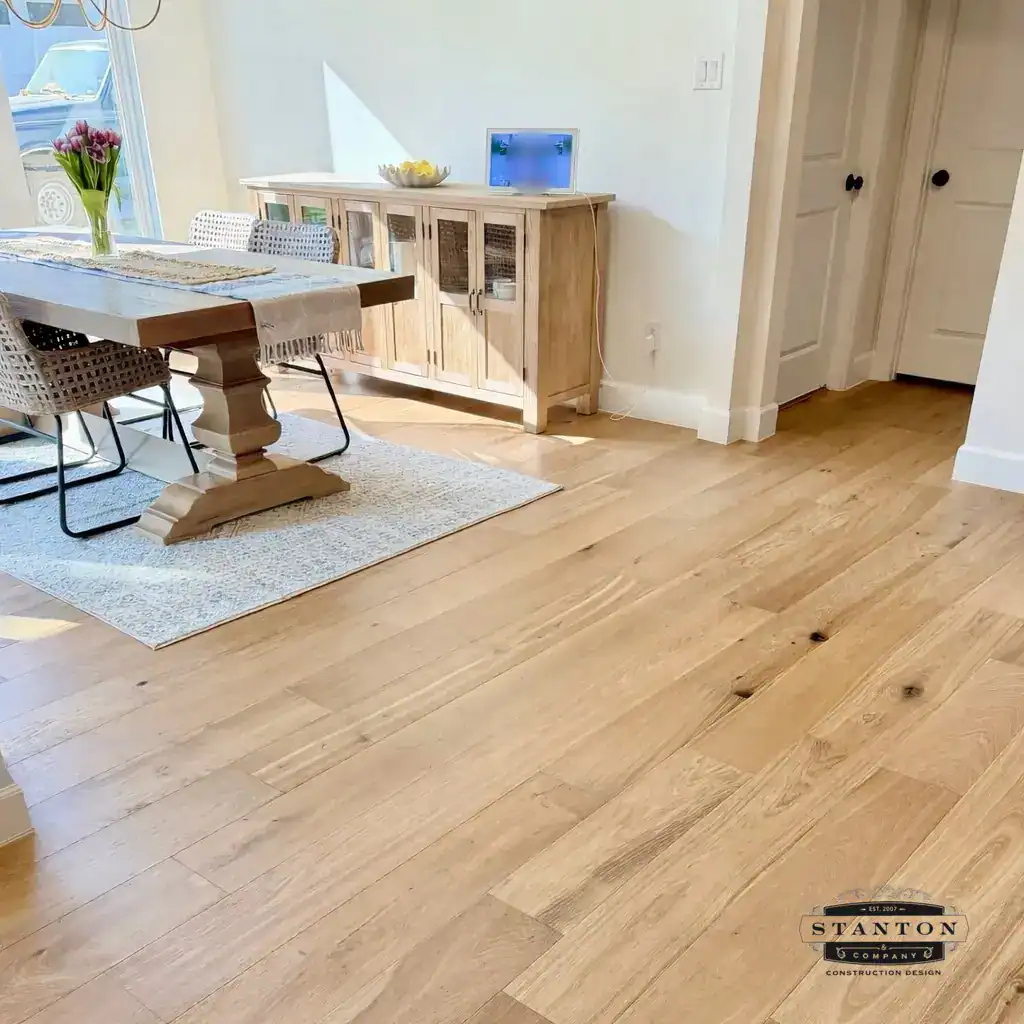
Solid hardwood’s defining advantage is longevity through refinishing. A solid hardwood floor can be sanded and refinished six to ten times over its life — essentially returning to like-new condition each time. In the right home, it is a generational floor that outlasts everything else in the house. Engineered hardwood, depending on veneer thickness, typically allows two to three refinishing cycles over its life.
For homeowners in established neighborhoods with wood subfloor construction, a whole-home humidity control system, and a long-term perspective, solid hardwood remains a legitimate and premium choice. In those conditions, the extra investment pays off over decades.
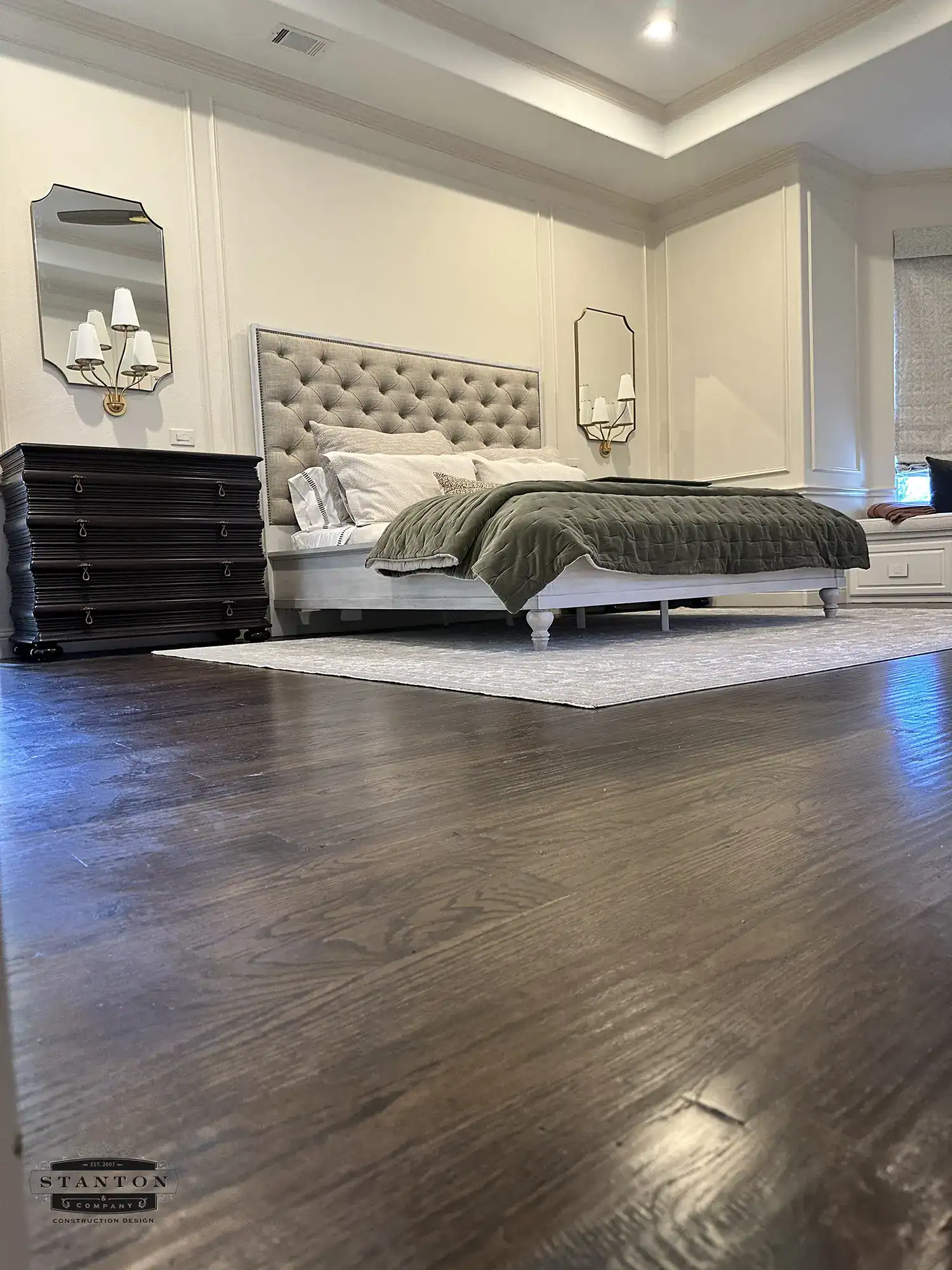
Both engineered and solid hardwood are real wood surfaces, which means both will show the marks of daily life over time — that is part of the character of a wood floor. But they wear differently, and understanding those differences helps set the right expectations before you commit.
Surface hardness: The species of wood used for the top surface determines hardness for both products. Whether engineered or solid, a white oak or hickory floor will resist dents and scratches better than a pine or cherry floor. The Janka hardness scale is the industry standard for comparing species — higher numbers mean harder wood. At Stanton & Co. we discuss species selection as part of every hardwood flooring recommendation, because hardness matters more in an active household than the engineered vs. solid distinction alone.
Scratch resistance: Both surfaces are equally susceptible to scratching from grit, pet nails, and dragged furniture because both present a real wood veneer at the surface. The factory finish applied to most engineered hardwood products is often more durable than a site-applied finish on solid hardwood — many engineered products use aluminum oxide or UV-cured finishes that are harder than traditional polyurethane. Either way, felt pads on furniture legs, area rugs in high-traffic zones, and keeping pet nails trimmed are the practical habits that determine how a wood floor wears regardless of which product is installed.
Denting: Wood dents under impact — this applies to both engineered and solid. Harder species dent less. A dropped cast iron pan will leave a mark on any wood floor; a softer species will show it more readily. This is a material reality of wood flooring, not a defect, and many homeowners appreciate the character that develops over time.
Wear layer depth and refinishing: This is the key long-term wearability distinction. Solid hardwood is typically 3/4 inch thick throughout — it can be sanded aggressively and refinished six to ten times over its life. Engineered hardwood has a real wood veneer layer of 1 to 6mm on top. Thinner veneer (1–2mm) allows one refinishing cycle at most. Thicker veneer (3–6mm) allows two to three cycles. Specifying a product with at least 3mm veneer is important for anyone who wants the option to refinish rather than replace. This is a number to ask about and confirm at the time of selection, not after installation.
Day-to-day maintenance is similar for both products — sweep or dust mop regularly, clean spills promptly, and avoid excess moisture. The differences emerge in how each product handles long-term care, damage, and refinishing.
Engineered hardwood — maintenance advantages: The factory finish on most engineered hardwood is durable and requires no additional treatment at installation. Regular sweeping and occasional damp mopping with a hardwood-safe cleaner is sufficient. Because engineered hardwood is dimensionally stable, it does not require the same humidity monitoring that solid hardwood demands. Minor surface scratches can often be addressed with touch-up kits or a light screen-and-recoat without full sanding. If a plank is badly damaged, individual planks in a floating installation can sometimes be replaced without disturbing the full floor.
Engineered hardwood — maintenance disadvantages: The veneer thickness limits how many times the floor can be refinished. Once the veneer is worn through, the floor must be replaced rather than restored. Some engineered products use adhesives and core materials that are sensitive to prolonged water exposure — spills should still be cleaned promptly, and any standing water is a problem. The factory finish, while durable, cannot be customized after the fact the way a site-applied finish can.
Solid hardwood — maintenance advantages: The depth of solid hardwood is its defining maintenance advantage. Surface scratches, dents, and finish wear that would require replacement of an engineered product can be addressed by sanding and refinishing solid hardwood. A solid hardwood floor that looks tired after 20 years can be brought back to like-new condition with a proper refinish — new color, new sheen, new surface. This cycle can repeat six to ten times over the life of the floor, making solid hardwood a genuinely long-term asset in the right home. Site-applied finishes also allow for custom stain color and sheen level that factory finishes cannot match.
Solid hardwood — maintenance disadvantages: Solid hardwood requires active humidity management year-round — particularly in the DFW climate where seasonal swings are significant. A whole-home humidification and dehumidification system is not optional for homeowners who want their solid hardwood to perform well long-term. Solid hardwood is also more sensitive to water — a spill that sits unattended on a solid hardwood floor can penetrate the seams and cause permanent staining or raised grain. Refinishing, while an advantage in theory, is also a disruption in practice: the home must be vacated during sanding and finishing due to dust and fumes, and the floor is out of service for 24 to 48 hours during the cure. Done every 10 to 15 years, this is manageable. If refinishing is required more often due to damage and wear, it becomes a major recurring cost and inconvenience. The homeowner should consider this lifestyle before selecting solid wood.
The honest answer depends on your foundation type, your home’s humidity management, your long-term plans, and lifestyle. For most Fort Worth-area homeowners on slab-on-grade foundations without whole-home humidity control, engineered hardwood is the right choice — it delivers the look and feel of real wood with better real-world performance in our climate. For homeowners with the right conditions and a long-term perspective, solid hardwood is a worthy investment.
This is a conversation we have with every homeowner who asks about wood flooring at Stanton & Co. We’ll walk through your specific home, your foundation type, and your situation before making a recommendation. For a full comparison of all flooring materials, see our comprehensive Flooring Comparison blog.
To schedule a free in-home consultation and estimate, call 817.731.5855 ext. 1 or reach us through our Contact Form on our website. You can also visit our Design Center at 4824 Camp Bowie Blvd., Fort Worth.
Choosing the Right Flooring for Your Fort Worth Area Remodel: A Comprehensive Guide
Is LVP Flooring a Good Choice for North Texas Homes?
How Much Does a Kitchen Remodel Cost in the Fort Worth, Texas Area?
How Much Does a Bathroom Remodel Cost in the Fort Worth, Texas Area?
What to Expect When You’re Remodeling: A Homeowner’s Complete Preparation Guide
Granite, Quartz, Quartzite, or Marble: Choosing the Right Countertop for Your Fort Worth Remodel
Contact Stanton & Company for a Free Estimate
Proudly Serving the DFW Metroplex
Stanton & Company provides full-service residential remodeling, custom cabinetry, countertops, flooring, and design services to homeowners throughout the Dallas–Fort Worth area, including Fort Worth, Benbrook, Aledo, Willow Park, Hudson Oaks, Weatherford, Brock, Keller, the Mid-Cities (Euless, Bedford, Hurst), North Richland Hills, Southlake, Colleyville, Argyle, Arlington, Pantego, Mansfield, Kennedale, Burleson, and Crowley. Visit our Design Center on Camp Bowie Blvd. or call 817.731.5855 ext. 1 to schedule a consultation.
Explore more remodeling tips, material comparisons, and project guidance from Stanton & Company.
Fall is one of the best times of year to get ahead of home maintenance. North Texas Falls are short and unpredictable, w …

The remnants of Hurricane Polo brought heavy rain and flooding to areas around Fort Worth this week. In light of Hurrica …
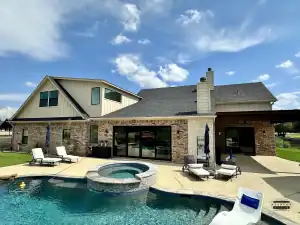
Sometimes your family has outgrown the house you love. If you are a homeowner in Fort Worth, Keller, Southlake, Mansfiel …
4824 Camp Bowie Blvd.
Fort Worth, Texas 76107
817.731.5855
Open 9am-5pm (M-F)
Open 10-2 (Sa)
6623 Corporation Parkway – Suite 140
Fort Worth, Texas 76126
817.441.2790
Open 8am-5pm (M-F)
© Copyright 2026 - 2026 Stanton and Company, Inc, All Rights Reserved. | Website Design by WABW Media Group